This is when powerful contractions are working hard to dilate your cervix. Established labour can last for a few hours or a day – it is unique to every woman. Moving, feeling safe and being as calm and comfortable as possible is going to help your cervix to dilate.
You may be…Excited, happy, empowered, positive and relieved that your labour is happening and your baby is coming. As well as overwhelmed, anxious, unable to keep going, in need of support, sore, tired, unsure of what to do next, emotional and in need of some space.
This range is all normal – use your breathing to be as calm as possible so you can focus on what you need to work with your contractions.
What is happening?
Stronger, powerful contractions are needed so your cervix can dilate from about 4cm to around 10cms.
Most of your contractions could be about 60 seconds long, going from about 3-5 minutes apart to about 2 minutes apart but this can vary a great deal – your labour will have its own unique pattern.
Your baby will become more settled in your pelvis.
There isn’t one type or length of labour to aim for – your labour will be unique to you and your baby so it can be beneficial for you to focus on being as calm and as comfortable as possible.
It is normal to experience a range of emotions and needs throughout your labour. You may need different support throughout to help you feel safe, comfortable
reassured and able.
Once your labour settles into strong and powerful contractions, it is unlikely to stop.
What established labour can look like…
As your contractions intensify, your adrenaline and oxytocin levels will have increased. This means that you may become…
*focused in your own world
*less talkative and chatty – communication is brief and to the point
*sleepy/trance-like – resting in-between your contractions and burying your head to feel safe and secure
*more instinctive – with positions, movements and noise
*less inhibited – to make noise, to wear less clothes
*in need of having your eyes closed more
*unable to sit as comfortably as earlier in your labour
*in need of labouring more in one space – standing, kneeling, leaning – and walking may be more of a waddle, as your baby settles further into your pelvis
When you are in the transitional phase of established labour – almost fully dilated – contractions can feel stronger and longer. So, you may also reach out for support and reassurance and seek eye contact to feel less vulnerable.




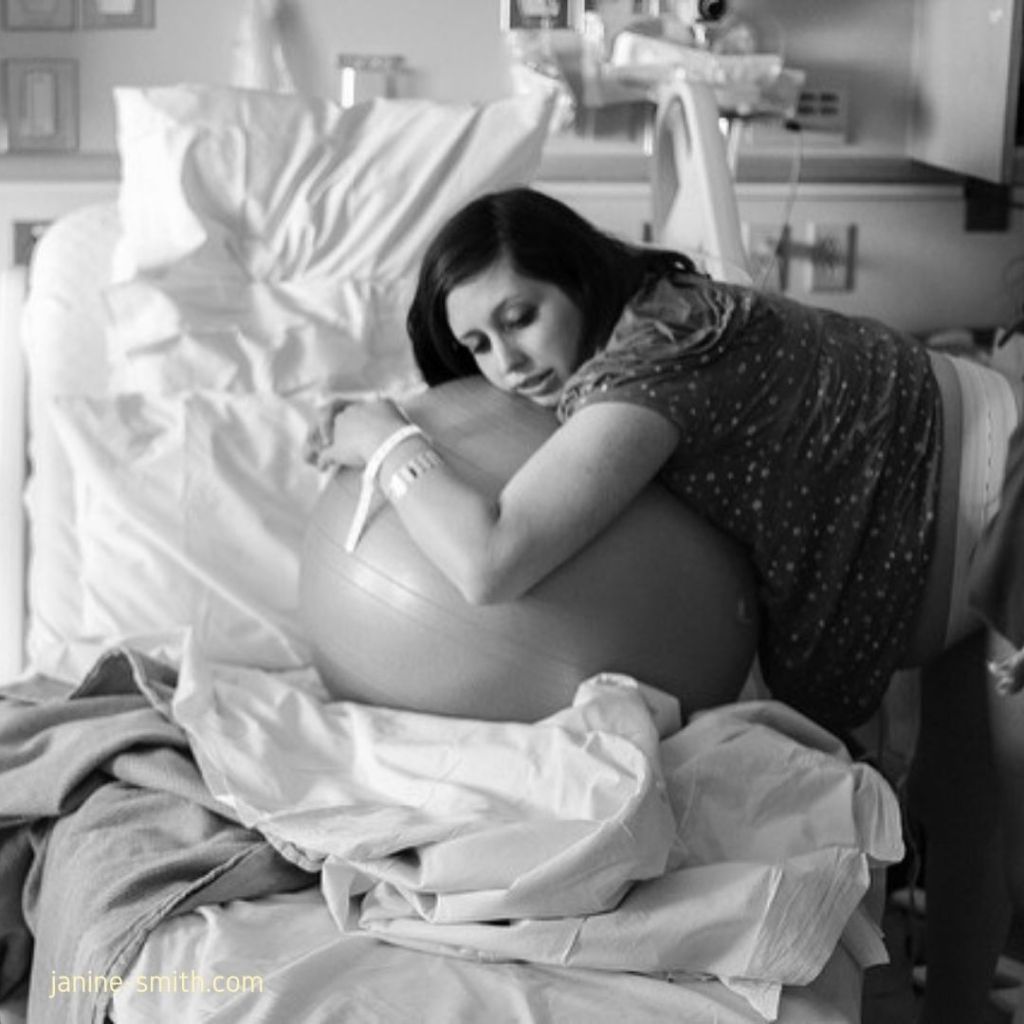

What can help with powerful contractions?
- Move, rock and sway as you need to – make use of gravity to help your contractions work more effectively and to be more comfortable.
- Try to listen to your body to get into the most comfortable positions for you.
- Drink plenty of water and rest when you need to.
- Use water – get in the bath, shower or birth pool.
- Get the support you need – massage, cuddles, help to move position, positive words of encouragement, eye contact.
- If you are feeling scared, overwhelmed or anxious, speak to your midwife for some reassurance. Ask for information if you need it so you know what’s happening and what your options are.
- Use your breathing during contractions. It will also help if you can slow your breathing so will can be calm and focused.
- Use your breathing to stay calm and in control and to head off any panic or anxiety or to refocus if you are feeling overwhelmed.
- Eat if you are hungry – you might not be starving but little snacks such as fruit, nuts, honey and breakfast bars may help to keep your energy levels up.
- If you aren’t able to eat, try to drink plenty of water and try sipping a glucose drink for energy.
- Tell yourself you can do it – take it one contraction at a time and rest in-between.
- Have a calm birthing environment which helps you to feel safe, calm and more relaxed.
- You need to feel safe and supported so your body can produce the right level of hormones to create strong hormones.
- Work with and trust your body.
What can partners do?
Women in labour need to feel safe, comfortable and reassured, so what can birth partners do to help?
- Stay calm
- Work as a team and provide support, reassurance and information
- Provide positive encouragement especially if your partner is tired or scared
- Encourage her to rest and conserve energy
Use Relax & Breathe Techniques
Remind your partner to relax her shoulders, especially with the out-breath, during a contraction. Tension isn’t useful as it can create adrenaline which can increase pain and panic – remind her to keep her jaw loose and to let go of tension.
Encourage her to breathe out – sometimes women hold their breath in labour but this can also create panic. Focusing on the out-breath can be a positive distraction during contractions which can aid relaxation and feelings of calm and control.
Being comfortable
Offer a drink after every contraction, especially after gas & air, and remind your partner to empty her bladder about every hour as a full bladder can be uncomfortable and it can slow labour.
Help her to change position – gravity can help the contractions to work more effectively and it can help your partner to rest and be more comfortable.
Try offering a massage – back, shoulders and hand can be really effective.
Is she hungry? Is she too hot or cold?
Information & reassurance
- Explain what is happening if your partner needs information to stay calm and reassured.
- Tell her she is doing it, she is brilliant and that she will meet her baby soon.
- You may need to gather information or talk to your midwife about what it going on.
- Remember Benefits-Risks-Alternatives if something is suggested and you don’t know why.
Birth environment
- You may need to look after the birth space, especially if your partner is struggling to settle and relax. Make sure it is quiet, with little chat and few interruptions.
- Can the lighting be turned down?
- Is there a ball, a chair and pillows to help your partner be mobile and more comfortable?
- Would listening to music help?
Simple and practical support
- Use eye contact and slow steady breathing to help your partner to stay calm and focused.
- Speak quietly and gently and you may need to speak firmly if she is tired and losing focus.
- Just be with her – sometimes you don’t need to do anything, it is about being there so your partner doesn’t feel isolated and vulnerable.
Remember:
Try not to be upset if your partner is harsh with you – she is probably tired and in pain so she could be quick tempered.
Be attentive, caring and affectionate – she needs to feel loved, listened to, safe and supported.
Issues that could impact labour…
SLOW LABOUR There isn’t a right length of labour – sometimes labour lasts longer than you expect it to and this could be because your baby isn’t quite in the right position. As long as you and your baby are ok, there is no need to rush it, sometimes progress is steady but slow but it can be exhausting and frustrating. You may need to dig deep to refocus and keep going.
It can help to:
- change position
- walk sideways up and down stairs to maximise the space in your pelvis, which can help your baby to move into a better position
- have a bite to eat and a drink of water
- empty your bladder to make space for your baby
- use your breathing to remain calm
- rest when you need to
- accept that your labour is long
- change your birth space – is it calm enough?
- think about what you need – does something need to change?
YOU ARE TIRED Labour can be exhausting so you need to conserve your energy and rest. Preparation for birth can focus on pain management but energy management is also vital…
- use positions where your whole body is
supported – so you can rest your arms and head - have a lie down for a little while if it is comfortable
- if you are calm, you will use less energy
- eat some fruit to boost your energy
- drink plenty of water
YOU ARE HAVING A WOBBLE It is normal and perfectly ok to reach a point where you feel like you can’t go on and that you can’t do it. You will need some good, positive support and words of encouragement to refocus:
- Use your breathing to head off any panic and to refocus.
- If you are distressed, you may need more pain relief or just more support and encouragement to keep going.
- Ask yourself what you need.
YOU ARE STRUGGLING WITH PAIN Discomfort and pain are a huge part of labour and birth as the muscles of your uterus work hard, not only to contract and dilate but to ensure your baby is in the best position for birth and to guide your baby down through the birth canal.
Some women need very little pain relief and others need more. How you manage and work with the pain can be based on:
- not being prepared for the pain and pressure of labour and birth, so it comes as a shock
- having a long labour, so you are tired. Working with your contractions is very much mind over matter, so it is possible to find it difficult to keep going if you are exhausted.
- having a short labour – quick labours mean powerful contractions which are probably close together.
Pain management can be about using different pain relief methods – gas & air, birthing pool, diamorphine or epidural – so talk to your midwife about your options.
Sometimes pain relief options are limited so to keep going it is all about good support & encouragement, focusing on your breathing to stay calm and keep on going.
Try to remember that the discomfort/pain of powerful contractions is a sign that labour is progressing – try to work with your contractions, rather than battling with them.
Focus on your breathing, slow your breathing down and relax your muscles so you are not too tense – this can help to keep you calm and it can help to balance your hormones. The release of endorphins helps to ease the pain of strong contractions.
Feeling safe and secure
You will need to feel safe and secure in labour, so you can let your body do what it needs to do…
- Do you feel comfortable and safe? If not, what needs to change?
- Use your breathing as a positive focus and distraction.
- Ask your partner, doula and midwife for support, encouragement and reassurance.
- Listen to your instincts and move into positions that feel right, comfortable and work for you.
- Tell yourself you can do it – you are doing it!
- Remind yourself that your contractions are bringing you your baby.
- Try listening to some relaxing music.
- Are there too many interruptions? Do you need more privacy? Have a chat with your midwife and doula so they can help keep noise and interruptions to a minimum.
- Head into the bathroom for a while – it can be a great place to get some head-space.
- Do you need the room to be darker?
- You could try using water – the birth pool or a bath can provide a private, calm, comfortable space
What your contractions might feel like
With powerful contractions, your bump will become firm with each one, relaxing again in-between. You might feel your contractions just in your bump or it could also be your lower back and in the tops of your legs.
For many women, there is no pain/discomfort in-between contractions so take this as an opportunity to rest.
As a general guide, you will know when your next contraction is starting – it will build up, reaching its peak when it is at its most intense, and then, as your uterus starts to relax, you will feel your contraction ending.
What might labour look like?

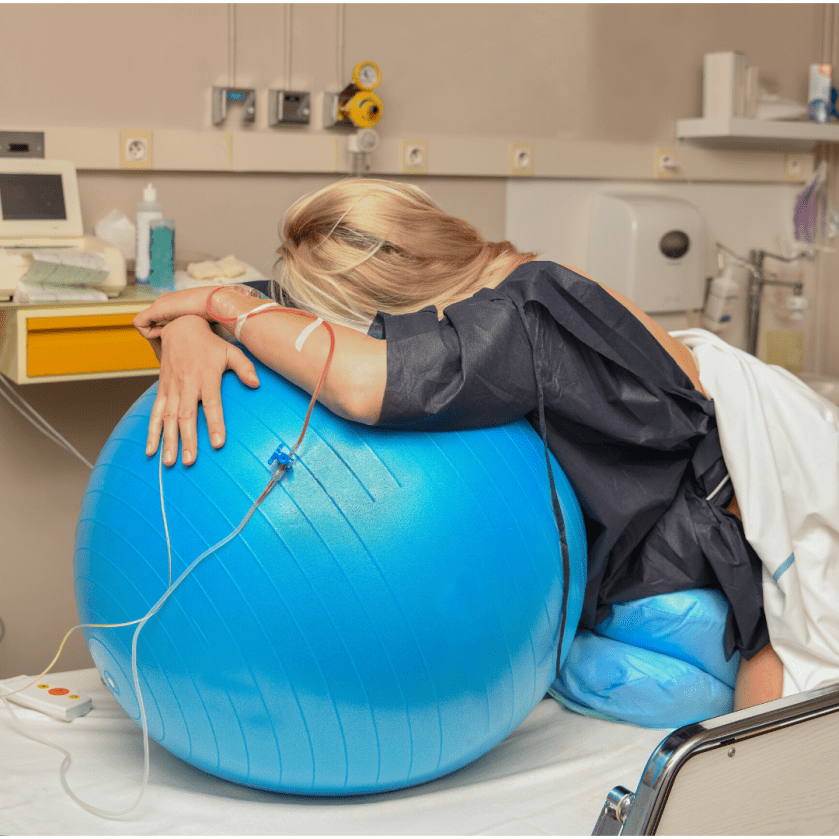
Labouring women can have very different needs throughout labour but there can be many similarities.
When labour is flowing and women feel safe, it can be very calm – they are able to relax, going from one contraction to another, breathing, moving, making noise, and resting in-between.
When labour is uninterrupted, the hormones work as they need to and women can move from being chatty and interactive to a quiet, trance-like state as labour progresses, when they don’t want conversation or to be disturbed at all.
When labouring women don’t feel safe, there can be more panic and fear with shouting and screaming. It could be that it is very different from what was expected, there could be a lack of support, the intensity could be overwhelming or it could be that you need information, reassurance, to refocus on your breathing, to have a word with yourself and to continue on or until more pain relief can be used.
If this is not your first labour, it can be very fast with strong contractions that are so close together they can feel continuous. This can be overwhelming and frightening – move to be as comfortable as you can and just breathe to be as calm as possible.
What you might need in labour?
*Birth ball
*Pillows
*Yoga mat/knee pad
*Music & speaker/headphones
*Snacks and water – a bendy straw and a sports bottle may be useful as well
*Food to snack on for energy
*Your birth partner
A summary of what you can DO during labour…
- DRINK WATER: so you don’t become dehydrated and tired.
- WEE REGULARLY: go to the loo about every hour, so your bladder is empty and your baby has more room to move into the right position for labour and birth.
- EAT: you may need energy.
- REST: kneel, lie, float, lean to conserve your energy in-between your contractions.
- BREATHE: know how to control your breathing to stay calm, focused and to handle any panic or anxiety. If you can use your breathing, you can get rid of any tension.
- MOVE: use gravity and different positions to stay comfortable and to work with your contractions.
- SAY WHAT YOU NEED: only you know how you are feeling and what feels right.
- ASK QUESTIONS: so you know what is going on and so you know what your options are.
- FEEL SAFE: have the support you need, be where you want to be.
- DON’T FEAR YOUR CONTRACTIONS: you need them, so don’t battle with them. Try to accept them and work with them in the best way for you – breathing, movement, water, pain relief – but let them have what they need to work: relaxation not tension & gravity not lying down.
- DON’T WAIT FOR PERMISSION: do what feels right and talk to your midwife so she can support and guide you.
- BE GUIDED BY YOUR BODY: for movement, comfortable positions, rest, pushing, what feels right and what feels safe.
Module 1: Labour
Mindset For Labour & Birth
Overview Of Labour & Birth
Early Labour
Established Labour

As you go through this module and the resources, you can make notes, jot down your questions and start to develop your action plan for labour and birth.
And please don’t hesitate to message me below to arrange a conversation with me to talk through your questions.

Welcome To Your Antenatal Course
1. Labour
2. Birth
3. Pain Management
4. Labour & Birth Challenges
5. Meeting Your Baby
6. Your New Baby
7. Relax & Breathe Resources
 antenatal & postnatal specialist