Caesareans can be planned during pregnancy or one can become needed after labour has started. The UK Caesarean rate is at 26.2% with 13.2% planned and 13% unplanned.

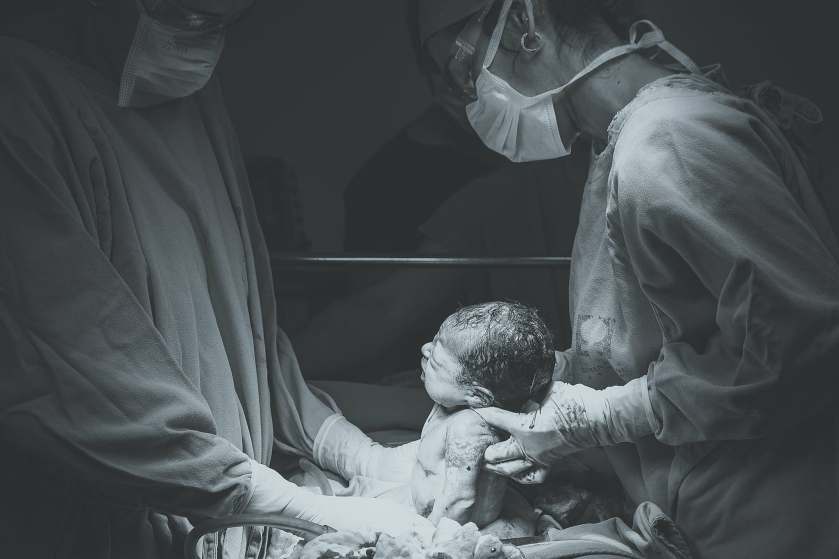
Preparation before a planned caesarean
You will have a hospital appointment to:
- Talk through your medical history and reasons for your caesarean
- Have blood samples taken to check your blood group and to check for anaemia
- Have swabs taken from your mouth, nose and perineum to check for any infection
- Be given body wash to take home to reduce MRSA
- Be given an antacid to take at home
- Meet with an anaesthetist and an obstetrician to talk through the surgical procedure and the potential risks of complications
- Sign a consent form
- Be given the time and date for your caesarean
If you have a Caesarean…
- You will be asked to remove your jewellery (although your wedding ring can be taped over), your contact lenses, make-up and nail polish, hair clips and any false teeth or braces.
- You will wear a hospital gown, which can be worn backwards so you can have skin-to-skin straight away with your baby, while you are still in the operating theatre.
- Your birth partner will wear scrubs.
- You will be given an antacid to neutralise your stomach acid, as well as anti-sickness medicine.
- The top line of your pubic hair may need to be shaved.
- A catheter will be inserted to keep your bladder empty. This can be done after your pain relief is in place.
- You will be asked to wear surgical stockings to prevent deep vein thrombosis.
- A cannula will be fitted into your hand – in case you need fluids to maintain your blood pressure or further pain relief.
- A blood pressure cuff will be attached to your arm.
- Electrodes will be placed on your chest to monitor your heart rate and you will also have a finger pulse monitor.
- A plastic plate will be attached to your leg as an earth for the electrical equipment being used.
- Antibiotics will also be given to you to prevent infection.
Anaesthetic
A spinal anaesthetic will most probably be used so you can stay awake and meet your baby. This is the safest option and contributes towards a better recovery. This numbs you from the bottom of your rib cage to your feet so you cannot feel any pain, although you may still be aware of some pressure and movement.
A general anaesthetic may be used if you have severe back problems, if you have very low blood pressure, if you experience heavy bleeding, if the spinal anaesthetic isn’t effective or an emergency arises with your baby and he needs to be delivered very quickly.
The Medical Team
- One lead obstetrician plus another obstetrician to assist
- One lead anaesthetist, possibly with an anaesthetic nurse to assist
- Scrub nurse or midwife to assist the surgical team with the birth of your baby
- A midwife to provide ongoing support for you and your birth partner
- A paediatrician or a paediatric team if there is any concern for your baby
- Medical students may be observing but you can say no to this
The birth of your baby
- Your partner, who will be in hospital scrubs, will be able to sit next to you, along with a midwife.
- You will be on a surgical table in the operating theatre and you will be wearing a hospital gown.
- The surgical table will be tilted slightly so your blood supply and blood pressure aren’t affected.
- Once the anaesthetic has been set up and checked, the obstetric team will begin your caesarean. The incision is usually a horizontal cut just above your pubic bone.
- Your muscles will be parted rather than cut, your bladder will be moved out of the way and your obstetrician will then make an incision into your womb.
- You shouldn’t feel any pain but you will be aware of some pressure and movement.
- You can ask for the abdominal screen to be lowered so you can see your baby being born.
- It can take about 15 minutes for your baby to be born, who will be checked over to make sure he is healthy and that he is breathing well. Most babies don’t need any further medical support so you can cuddle your baby for as long as you want to.
- After your baby has been born, your placenta will be next. You will be given a dose of syntocinon through your drip, your placenta will detach from the side of the uterus and it will be lifted out through the caesarean incision.
- After your placenta has been delivered and checked over, the obstetric team will begin the process of stitching the incision in the uterus and then the incision in your abdomen.
- You will be in the operating theatre for about an hour, although it might be for longer if your obstetrician needs more time.
In the recovery ward
When your caesarean is complete, you will move to the recovery room with your baby and your partner, where you will stay for a few hours while you are monitored before moving to the postnatal ward.
It can take a few hours for the affects of your anaesthetic to wear off but you can have as much skin-to-skin with your baby as you want and you can feed your baby.
Your recovery from the anaesthetic and observations (your respiratory rate, heart rate, blood pressure, pain and sedation) will take place in the recovery ward. Be aware that you might be shivery after your caesarean – use a blanket and socks to warm up.
If it is not possible for your baby to be with you in recovery, this should be explained to you and it may be possible for your partner to see and spend time with your baby. Ask questions so you know what is happening and what your options are.
On the postnatal ward
- A catheter will be kept in place until you are able to walk to the bathroom, which could be the next day. But ask, so you know what to expect.
- Movement can be sore to start with – twisting, changing position and walking can be painful, as can laughing or coughing. It can help to hold your wound when it is sore.
- Within 24 hours you will be encouraged to walk around – to get to the toilet and to have a shower. Walking can be slow to start with – take your time, use support and rest when you need to.
- You can continue to cuddle your baby as much as you want to.
- If your baby is in a bedside cot – ask for your baby to be given to you to cuddle or feed. And you will need help to put your baby back into the cot.
- You will most probably be given heparin injections to prevent blood clots.
- IF YOU NEED HELP AND ASSISTANCE – PLEASE ASK FOR IT!
Care of your wound
This includes:
- having the dressing removed about 24 hours after your caesarean
- monitoring for any fever, which can be a sign of infection.
- assessing the wound for signs of infection (such as increasing pain, redness or discharge), separation or rupture.
- wearing loose, comfortable clothes and cotton underwear so nothing is rubbing against your stitches.
- gently cleaning and drying the wound daily. Pat rather than rub the wound and gently pat it dry with a clean towel.
- If you have removable stitches – this will be done by your community midwife after about a week.
Ask questions if you are unsure of anything and so you know what to expect.
To be aware of…
- Some women experience constipation and trapped wind after a caesarean.
- Shivering in theatre and in the recovery ward can be completely normal.
- If you experience any chest pain, a cough, shortness of breath or pain/swelling of your calves get checked out as this can be a sign of DVT.
- If your wound is red, swollen and painful or if there is discharge, it could be a sign of infection.
- If you are concerned about anything, seek some help and support straight away.
Back at home
- You could be back at home by 36-48 hours after your caesarean.
- It is important to rest as much as possible – potter about but try not to do anything apart from cuddle and feed your baby (and cuddle/sit with any older children).
- Take a bath or shower, eat well, drink plenty of fluids and rest.
- You will probably be given pain relief to bring home, along with Heparin injections to prevent blood clots – all of this will be explained to you before you leave the hospital.
- Eat well and drink plenty of water.
- Don’t lift anything for a few weeks and avoid things such as hoovering, using a shopping trolley and pushing a pram as this can hurt and cause pressure on your scar.
- You may not be able to drive for up to 6 weeks – check with your insurance company and see how your scar feels.
Your scar
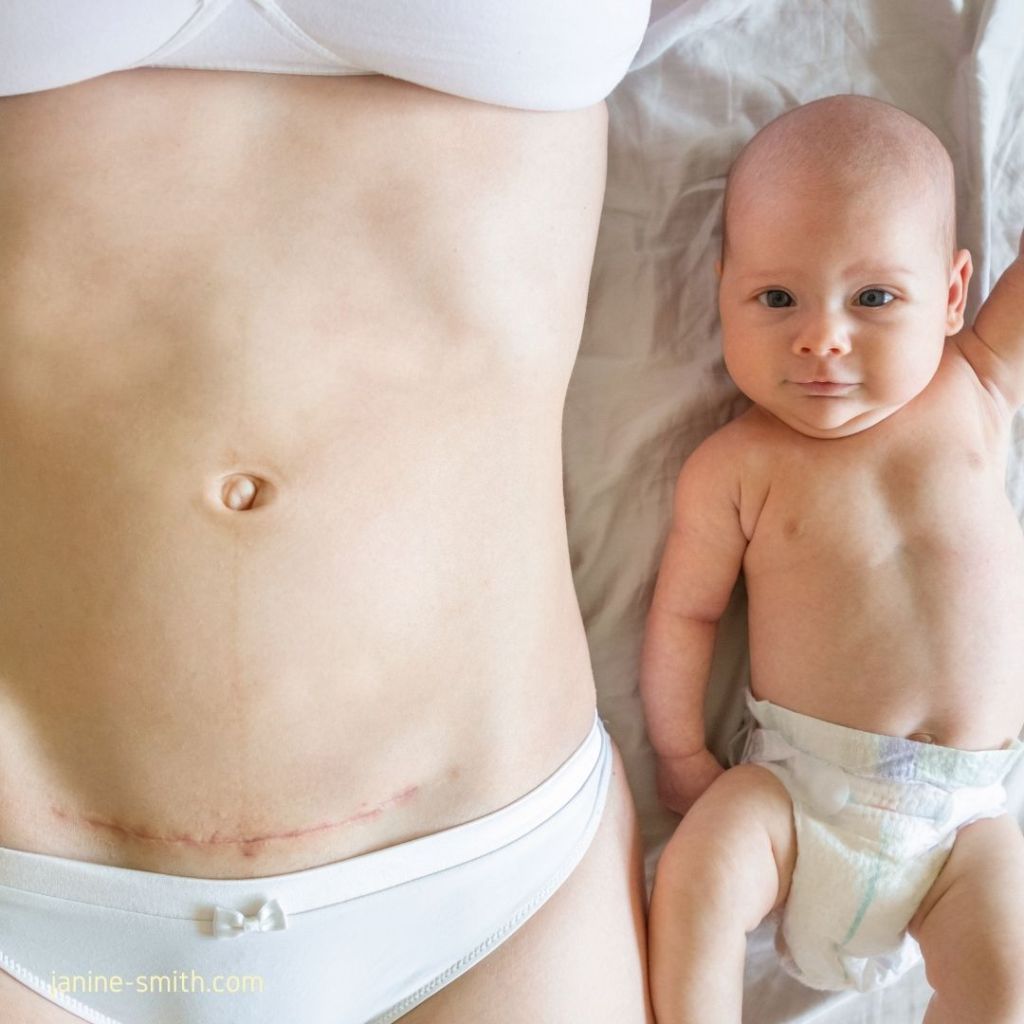
This will most likely be along your bikini line and it could look red and puffy to begin with but this should gently start to fade over the first few days and weeks. If you have any questions or concerns, make sure you talk to your midwife about it in hospital and again when you are at home.
The scar should fade over time, although some scars do remain a bit raised.
The scar and the area around it could be numb – for some women this improves after a few months but for others it can be permanent.
Potential Complications
Common
Infection: 6 in 100
Haemorrhage: 5 in 100
Persistent wound discomfort for a few months: 9 in 100
Cut to the baby: 1 in 100
Uncommon
The need for a hysterectomy: 8 in 1,000
Injury to the bladder or bowel: 1 in 1000
The need for further surgery: 5 in 1,000
Risk of uterine rupture during subsequent pregnancies/birth: 2-7 in 1000
Placenta praevia and placenta accreta: 4-8 in 1000
A summary of what you can DO during a caesarean…
- BREATHE: know how to control your breathing to stay calm, focused and to handle any panic or anxiety. You can use your breathing before, during and after your caesarean to help to keep you calm and to manage any pain/discomfort as you heal.
- SAY WHAT YOU NEED: to know what is going on before/during your caesarean and to be more comfortable afterwards.
- ASK QUESTIONS: so you know what is going on and so you know what your options are.
- FEEL SAFE: have the support you need so you know what is going on and more of what to expect during your caesarean, in recovery and on the postnatal ward.
- TRY NOT TO FEEL SCARED: having a caesarean could make you feel frightened but try to be reassured that the medical staff are experienced in caesareans and they will answer all your questions so you feel safe and calm.

As you go through this module and the resources, you can make notes, jot down your questions and start to develop your action plan for labour and birth.
And please don’t hesitate to message me to arrange a conversation to talk through your questions.

Welcome To Your Antenatal Course
1. Labour
2. Birth
3. Pain Management
4. Labour & Birth Challenges
5. Meeting Your Baby
6. Your New Baby
7. Relax & Breathe Resources
 antenatal & postnatal specialist
Leave a Reply