There are a range of pain relief options available for women in labour. From mild but effective methods such as using your breathing, the birth pool and the TENS machine to medical pain relief with opiate drugs and the epidural. Pain relief needs to be part of your preparation for labour & birth, so you know what your options are and how to make pain relief work for you.
TENS Machine
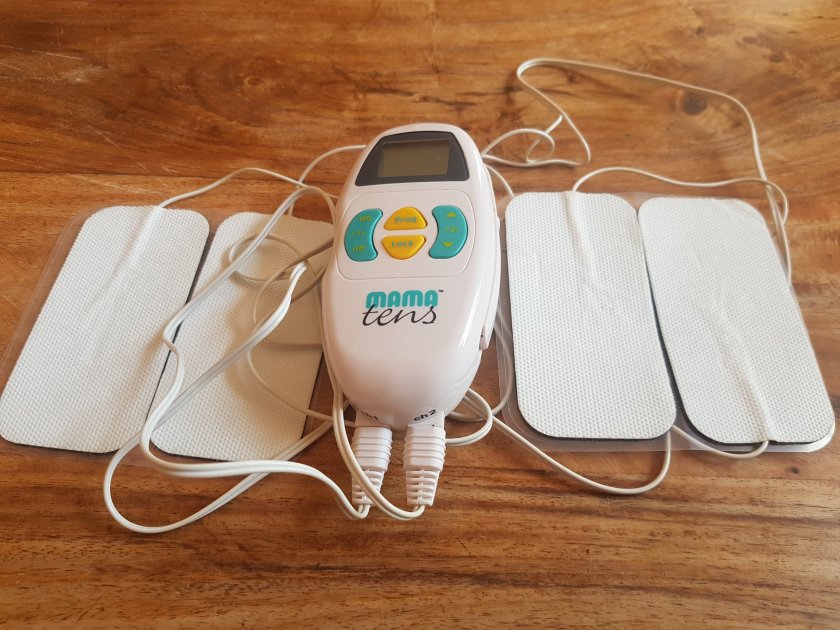
A hand-held unit and 4 pads which are placed on your back, close to your spine. The pads transmit small electric pulses, which can affect the pain signals reaching your brain and which can stimulate you to release endorphins, your natural pain relief.
What’s good about it?
- You can be mobile and in control of it. It can be used in early labour while you are at home.
- It can be used throughout your labour.
- It may take the edge off your contractions and any backache.
- It can be a positive way to work with contractions.
- It doesn’t interfere with your labour.
- There are no lasting side effects and if you don’t like it, you can just take it off.
- You can start it on a low setting and you can turn it up as your contractions intensify.
Things to remember
- Take it off before using the bath, shower or birthing pool.
- You will need to buy or hire one in pregnancy.
- A maternity TENS will have a boost button to use during powerful contractions.
Entonox / Gas & Air
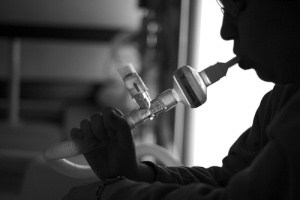
Entonox is a combination of nitrous oxide and oxygen which is administered by a mouthpiece or a mask.
What’s good about it?
- You stay in control of using it.
- It helps you work with your contractions and it helps you to focus on your breathing.
- You can be mobile and active.
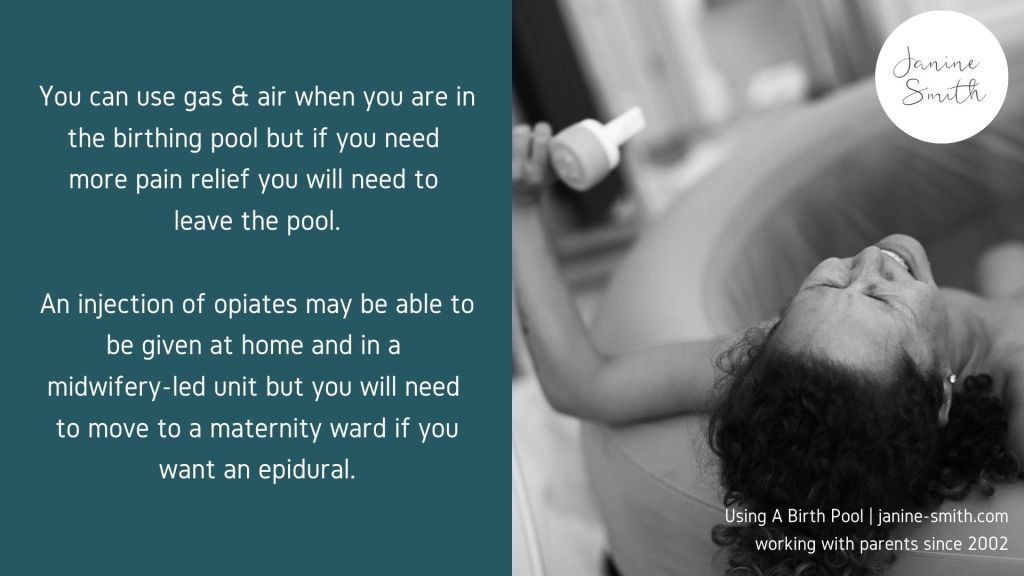
- You can be in the bath or the birthing pool.
- You can use it throughout labour and birth.
- You can use it with a home birth.
- It helps you to work with your contractions, it takes the edge off them and makes them more manageable.
- It is easy to use and you only need to use it with a contraction.
Things to remember
- If you don’t like it you can stop using it.
- It could make you a bit woozy and nauseous so you need to take a break from it in-between contractions.
- It probably won’t be an option until you are in established labour with strong contractions.
- It can take a few contractions to get used to it and to learn how to use it but stick with it for a while because it can be effective.
- Make sure you have a drink after each contraction as it can dry your mouth.
- You will also need some lip-balm as it can also dry your lips.
Pethidine & Diamorphine
This is an opiate which is usually injected into the thigh although some maternity units administer it by a drip. 1 in 4 women use an opiate in labour.
What’s good about it?
- You can ask for a small dose to see how it makes you feel and this could help you to stay focused, relaxed and calm if you are feeling panicky.
- It could help you to rest and maybe sleep if you are having a long labour.
- It can be given in early labour if you are having back pain due to the position of your baby.
- You can have more than one dose – your midwife may suggest an internal examination to check how dilated you are.
Things to remember
- It might make you feel sick and dizzy but you can be given an
anti-sickness drug to help with this. - It crosses the placenta so it could affect your baby’s breathing and feeding when he is born. Your midwife will be aware of this and you probably won’t be able to use this if your midwife thinks the birth of your baby is imminent.
- It may last for 4 hours – once it is in your system, you have to wait for it to wear off.
Epidural

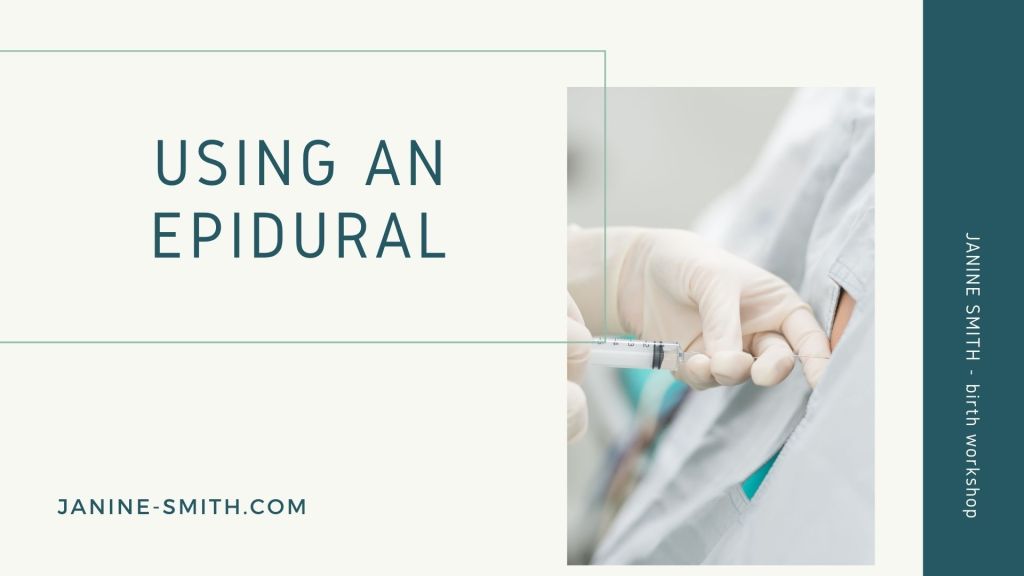
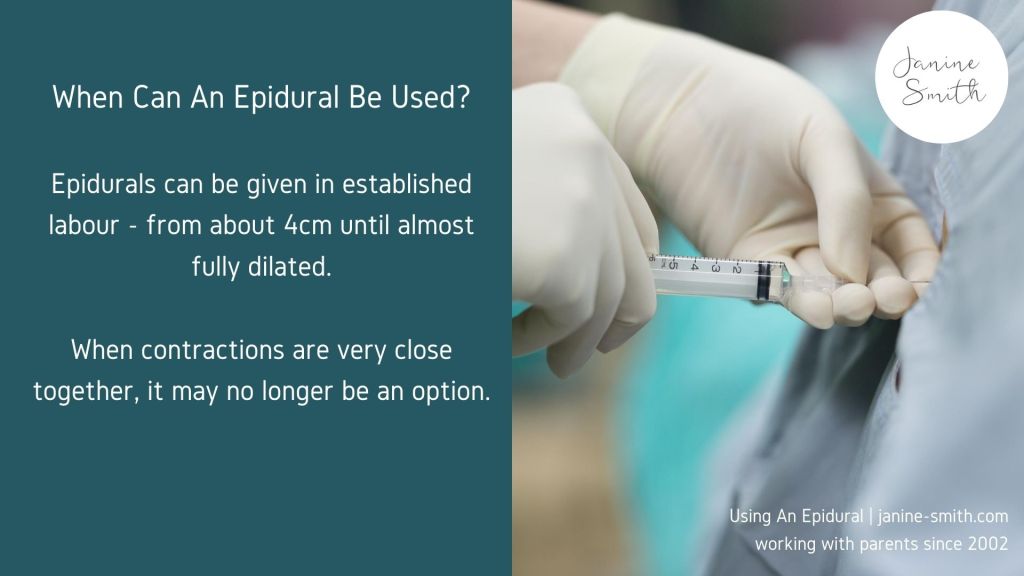
This is a local anaesthetic which is administered into the spine by an anaesthetist. This pain relief can be very effective, removing the pain of contractions. 30% of labouring women use an epidural. It can be used in established labour until your contractions are very close together, when it may be too difficult to administer.
What’s good about it?
- It can help you to rest and ease any distress.
- You can use it in established labour.
- It is a low dose epidural – a combination of bupivacaine and fentanyl – which means that you should be able to move your legs and feet. This will allow you to change position and move around on the bed.
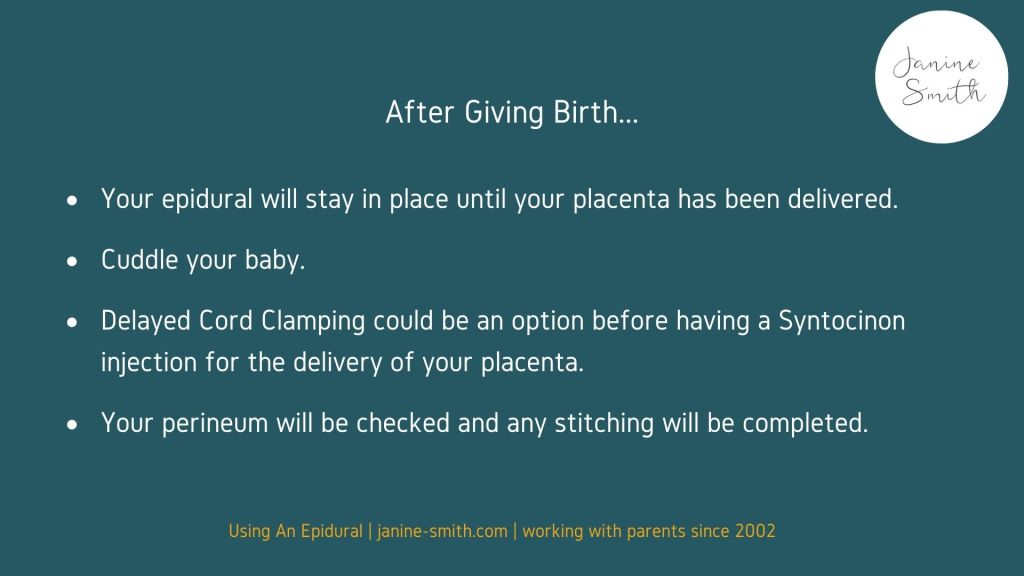
- It will stay in place until your baby is born and your placenta has been delivered.
Things to remember
- 50% of epidurals lead to birth by forceps or ventouse.
- It can slow your labour which increases the need for a Syntocinon drip.
- 1 in 100 women have a severe headache.
- Your baby will be continuously monitored.
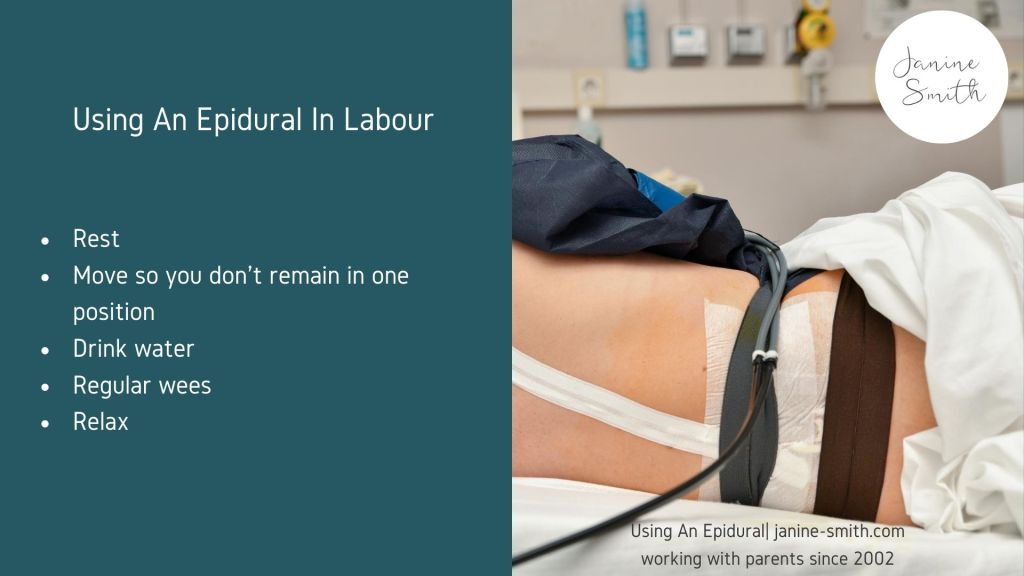
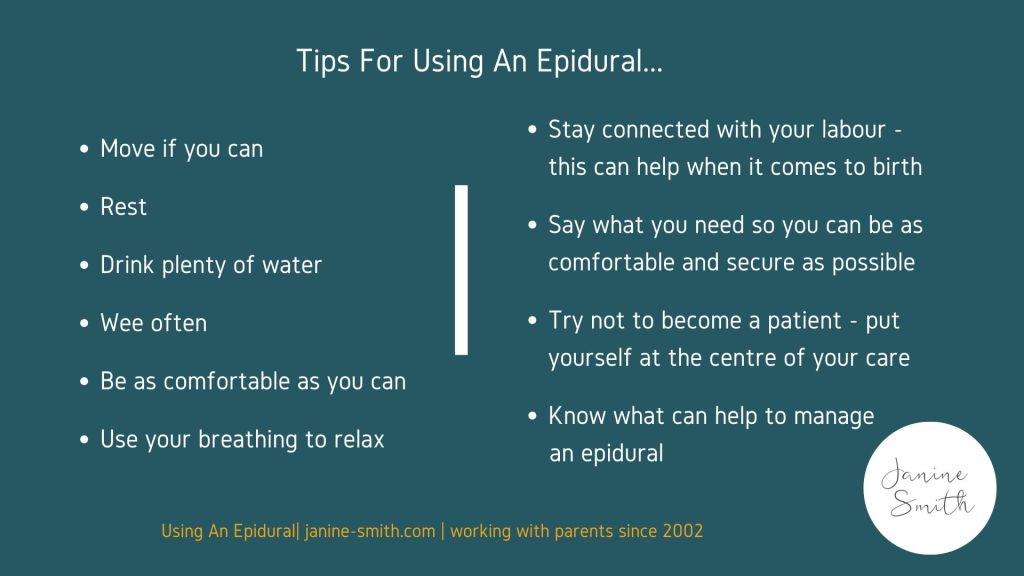
- You will need to stay on the bed but you can use upright positions, which may reduce the need for interventions.
- It may not relieve the discomfort/pain of back pressure.
- You may need to wait for an epidural and it can take about 40 minutes to feel the affect of it.
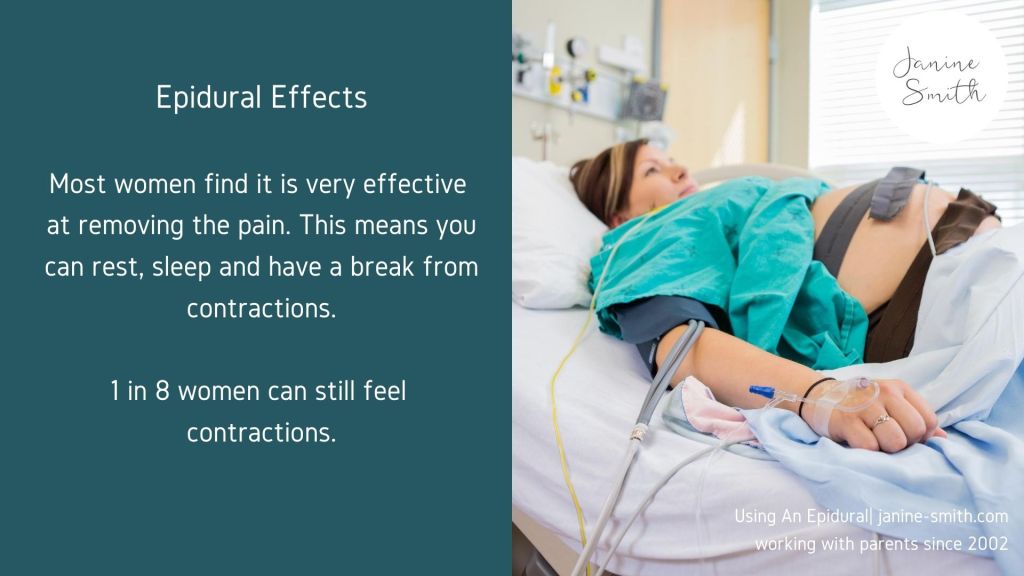
- It doesn’t always work as well as expected: 1 in 8 women say they can still feel their contractions.
- There is a risk of nerve damage but it is rare: 1 in 1000 experience temporary nerve damage and 1 in 24,000 experience permanent nerve damage.









Birth Pool

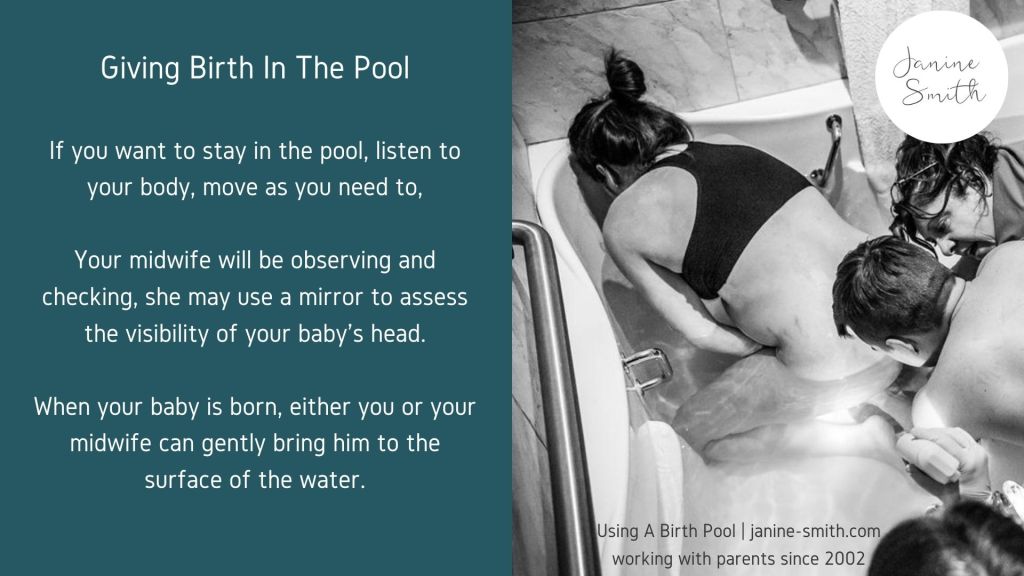
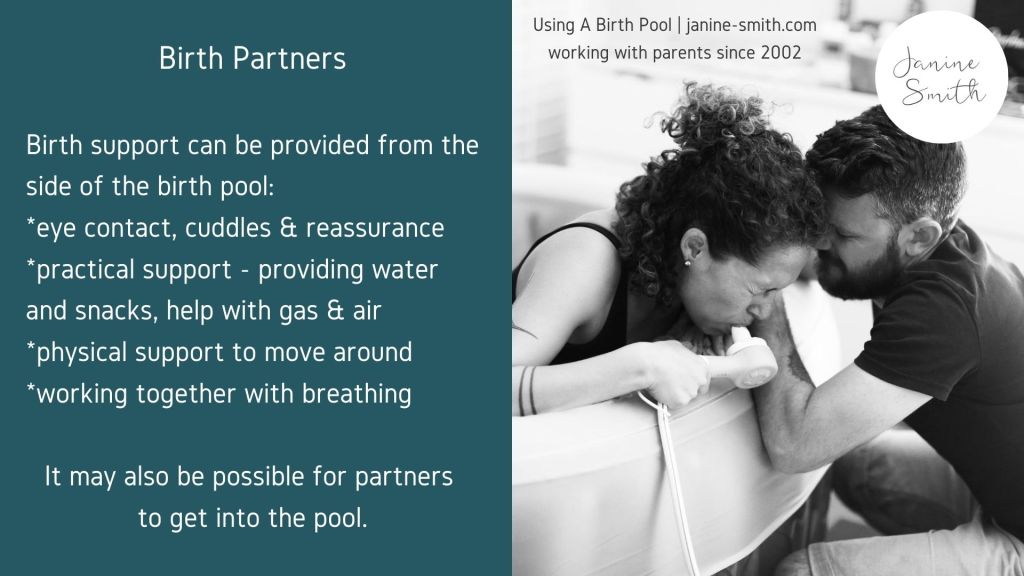
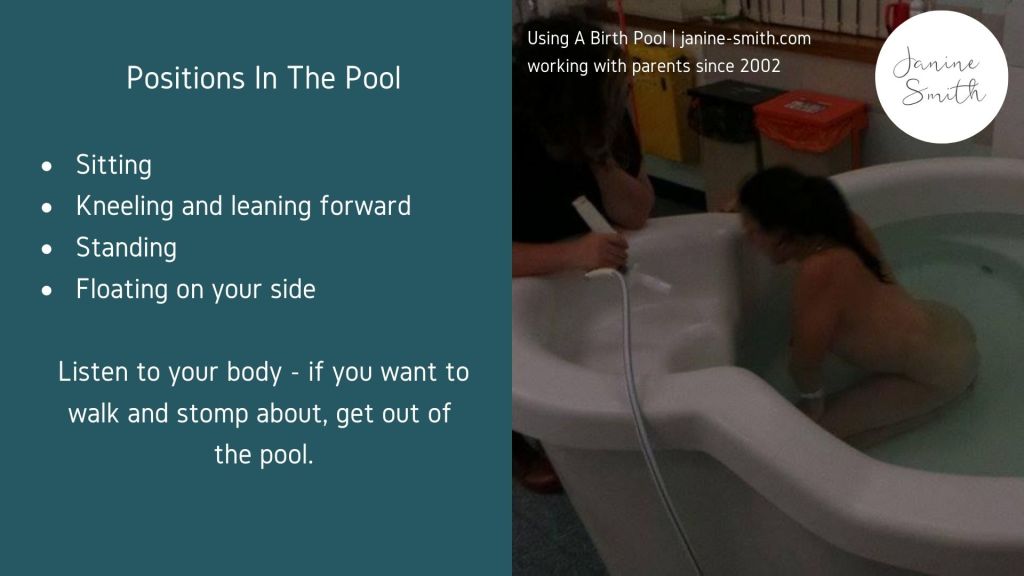
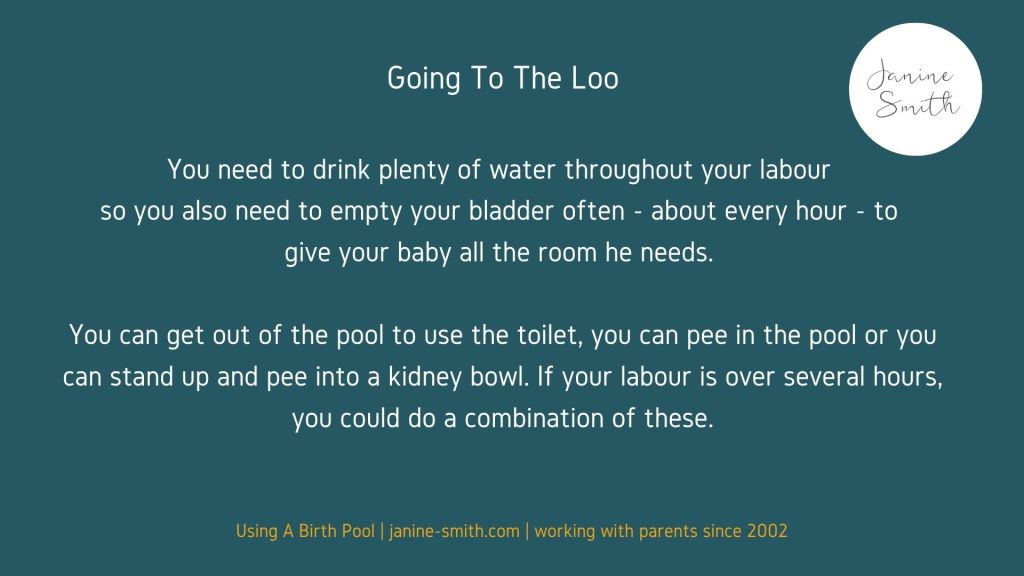
This is a large pool of water, which you can be immersed in.
It is bigger than a bath so you can kneel, move around, float, use different labour positions and rest.
What’s good about it?
- It’s a warm pool of water in which you can relax your whole body. The temperature is kept at 37 degrees, which is body temperature.
- It gives a calm, private space to labour.
- The warm water helps to ease discomfort and pain and it can help to relax your muscles, including your uterus. The more relaxed you are, the more oxytocin you can produce which creates strong, effective contractions.
- You will have more one-to-one midwifery care.
- You are less likely to need an epidural.
- Your baby can be born in the water and the chance of you tearing is reduced.
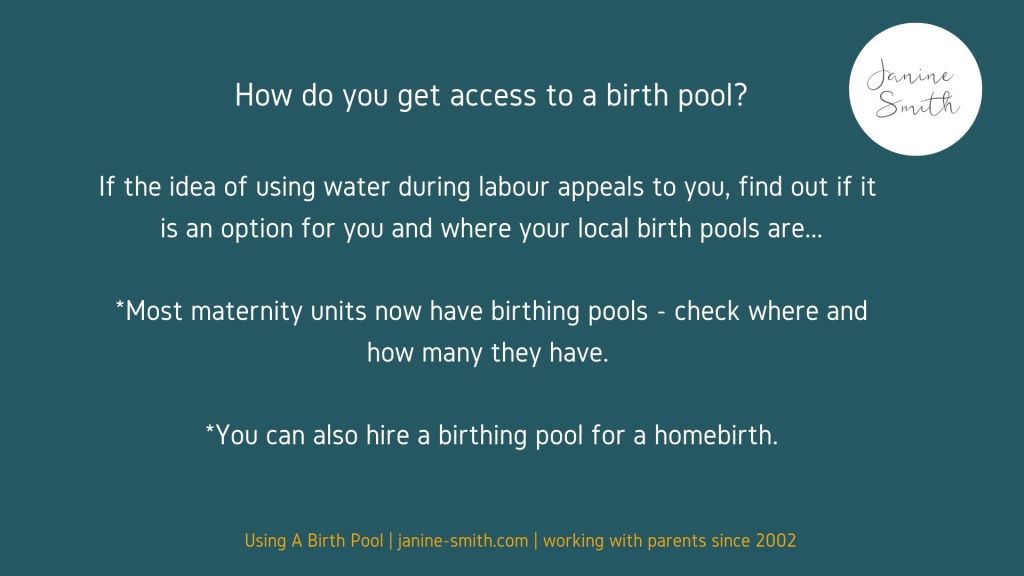
- You can use a birthing pool in a home birth.
Things to remember
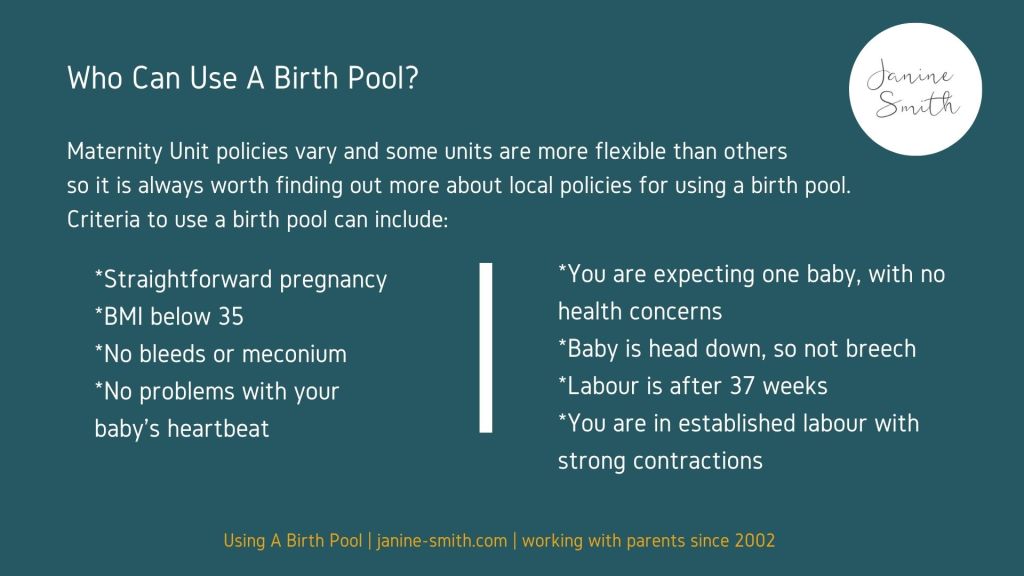
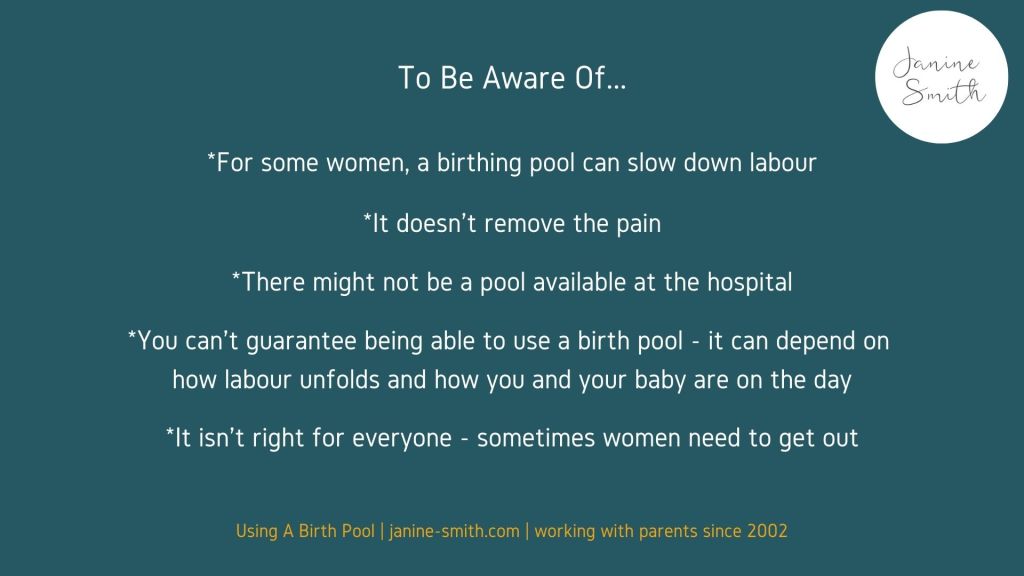
- You need to be classed as low risk to use the pool – so your blood pressure and temperature need to be normal, as does your baby’s heart-rate.
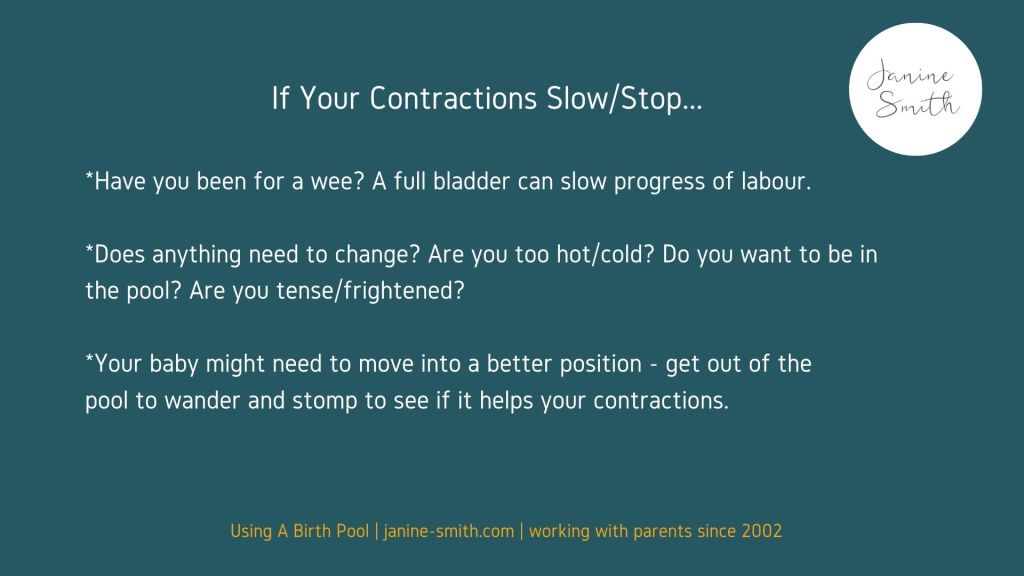
- If your contractions slow down when you are in the pool, you may need to change position or get out and walk about for a while.
- Your midwife can monitor you and your baby in the pool – if she becomes concerned about anything, she will ask you to get out of the pool.










Using Relax & Breathe techniques
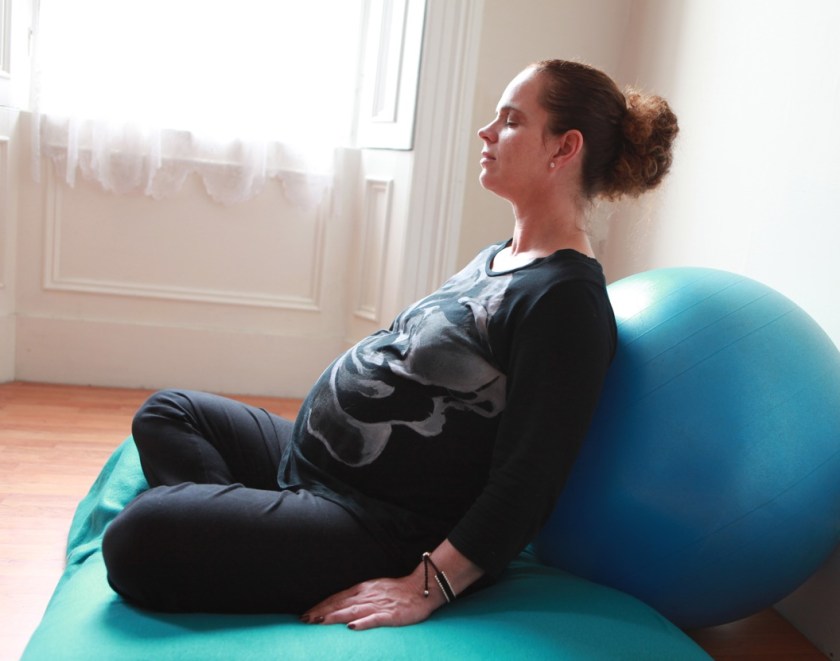
Being able to relax and to use your breathing in pregnancy as well as in labour, can be a vital tool for working with your contractions – staying calm, managing your energy and handling each contraction.
The key to it is keeping it simple, try not to over-think it: breathe in slowly and gently and then relax your body as you breathe out slowly.
- It’s easy and simple and if you can practice relaxation techniques in pregnancy, you are more likely to use them in labour.
- Rhythmic breathing maximises the oxygen for you and your baby.
- Knowing how to relax & breathe can reduce the risk of having an assisted birth.
- Using your breathing to be relaxed can boost the oxytocin you produce which can create strong and effective contractions.
- You are in control of your breathing and you can use it throughout labour – for contractions and for staying calm.
Things to remember
- Shallow breathing and holding your breath can create stress and adrenaline, which can make your contractions harder to work with.
- Being stressed can make you exhausted.
- Holding your breath and pushing is not recommended. Pushing for longer than 5 seconds at a time could impact how well your baby manages with the contractions.

As you go through this module and the resources, you can make notes, jot down your questions and start to develop your action plan for labour and birth.
And please don’t hesitate to message me to arrange a conversation to talk through your questions.

Welcome To Your Antenatal Course
1. Labour
2. Birth
3. Pain Management
4. Labour & Birth Challenges
5. Meeting Your Baby
6. Your New Baby
7. Relax & Breathe Resources
 antenatal & postnatal specialist
Leave a Reply