The Royal College of Midwives (RCM) promotes the use of different positions for labour and birth to enable labouring women to feel comfortable and to help labour to flow.
The RCM states that: “Gravity is the greatest aid in giving birth but for historical reasons we can make women give birth on their backs. These resources can be used to help women understand and practice alternative positions during pregnancy, to feel free to be mobile and to use different positions during labour and birth.”
The key to using positions and movement in labour is to listen to your body, to allow instinct to take over so you use positions for rest and for your contractions.
Using different positions during labour & birth can mean that you are better able to…
- get comfy and let your body do what it needs to do
- rest and conserve your energy
- keep upright and mobile if your baby is being monitored


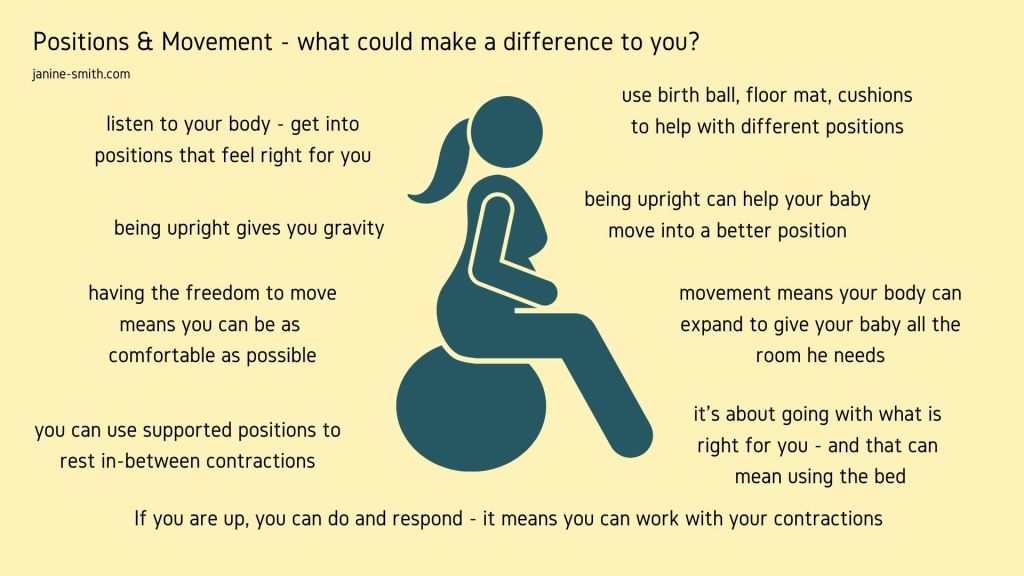
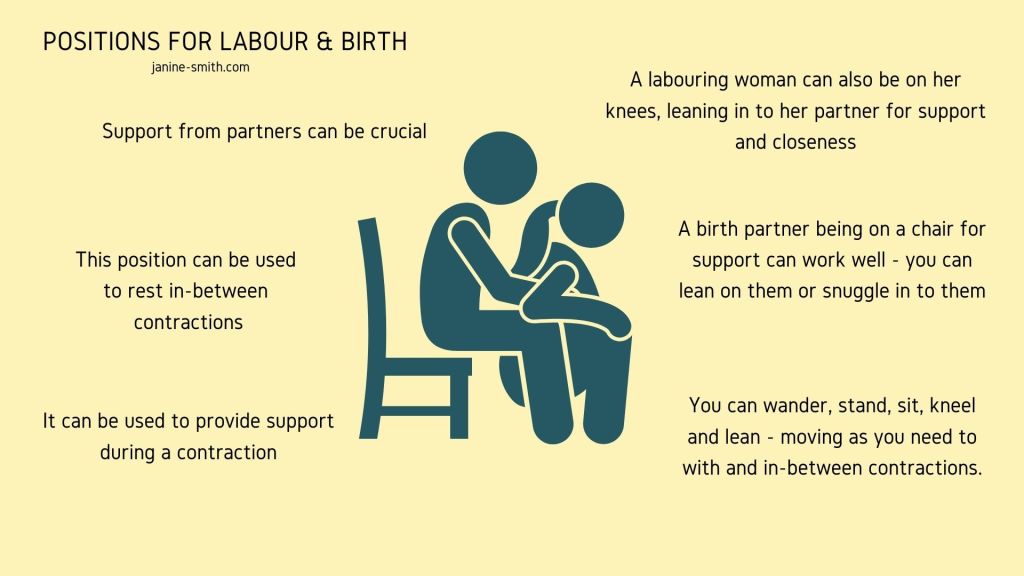
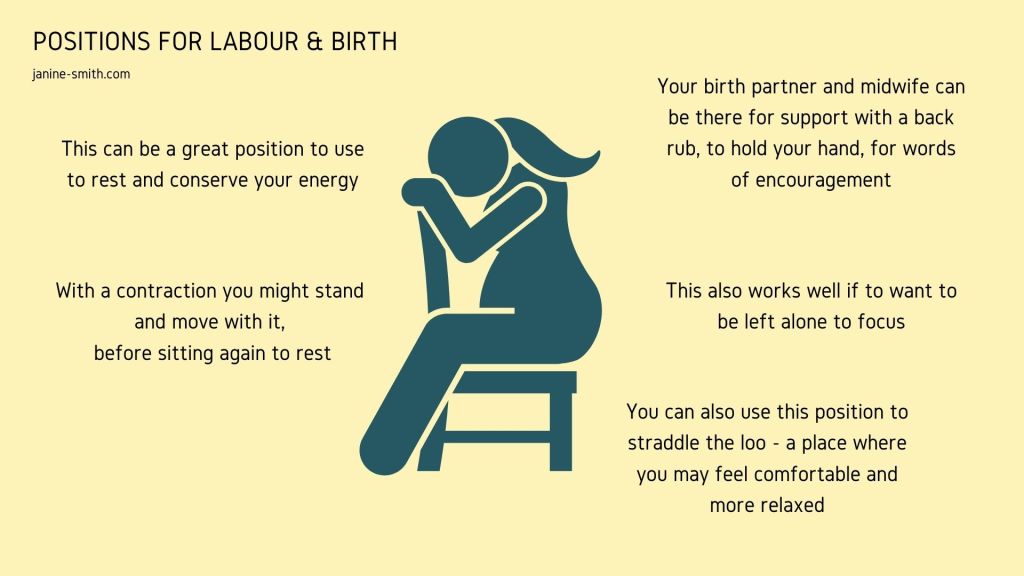


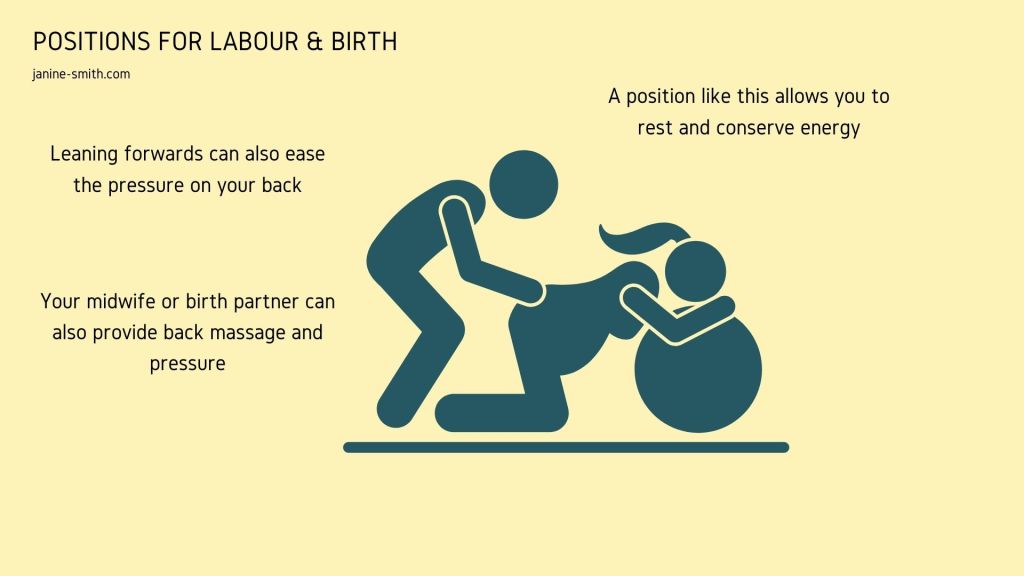

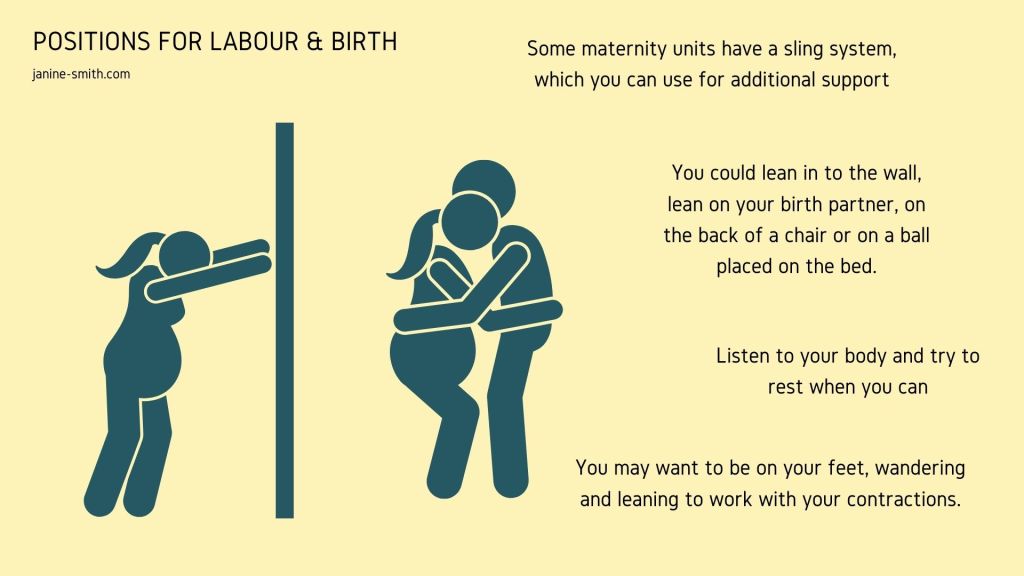
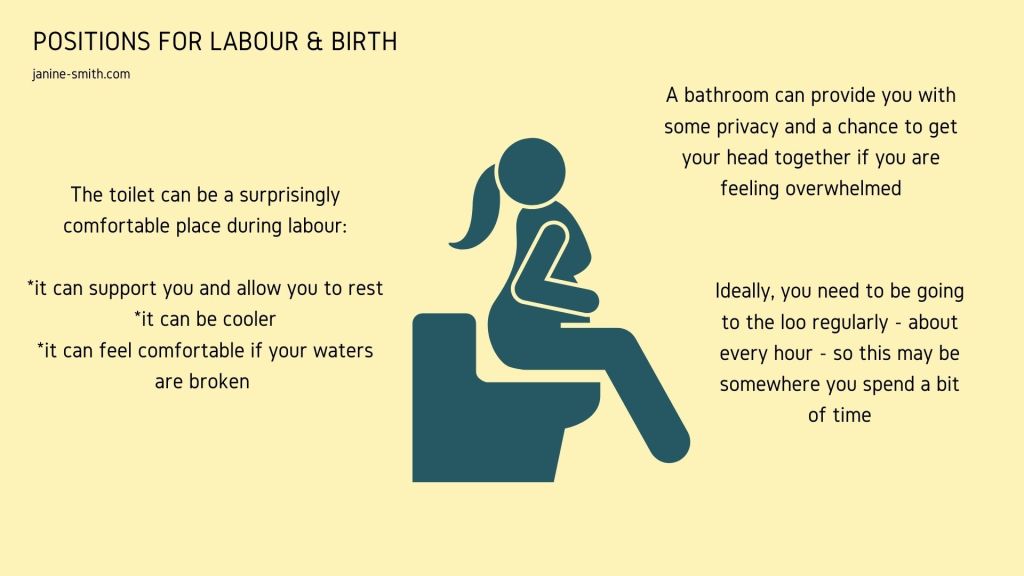


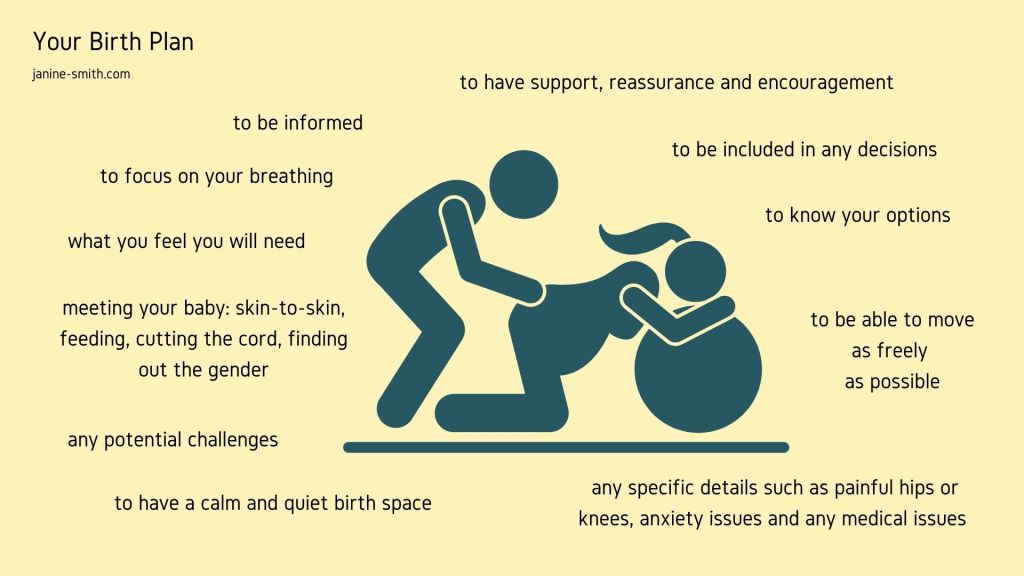
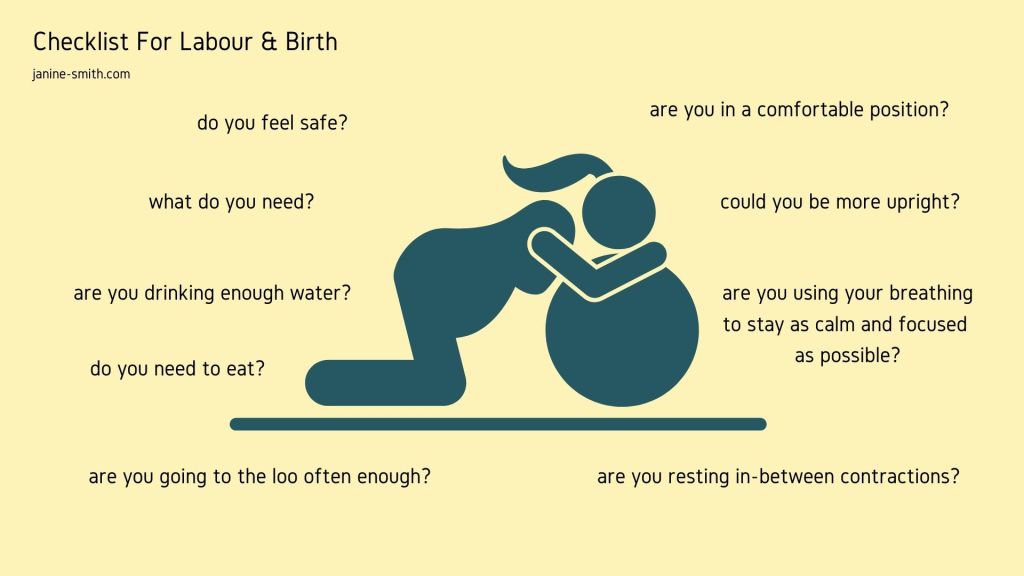
It is also important to remember that if your baby is being continuously monitored, you most probably don’t need to stay on the bed. In many circumstances, you can continue to use positions and movement to be as comfortable as possible.


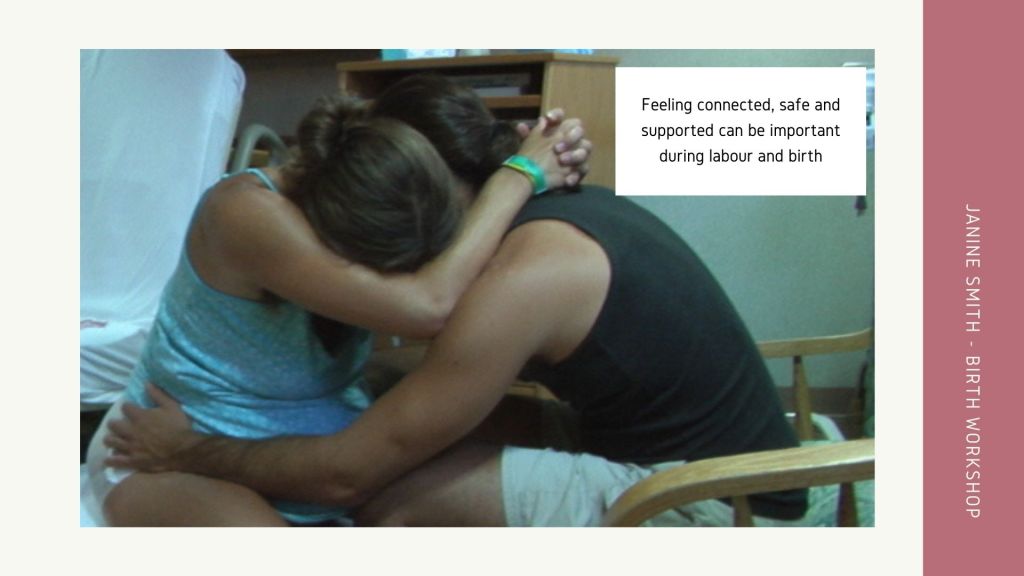
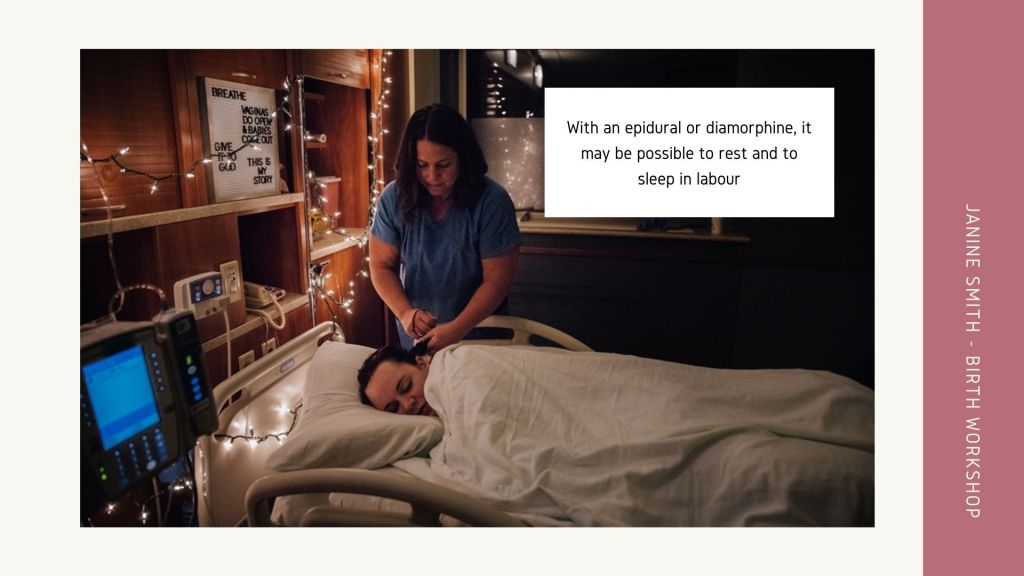


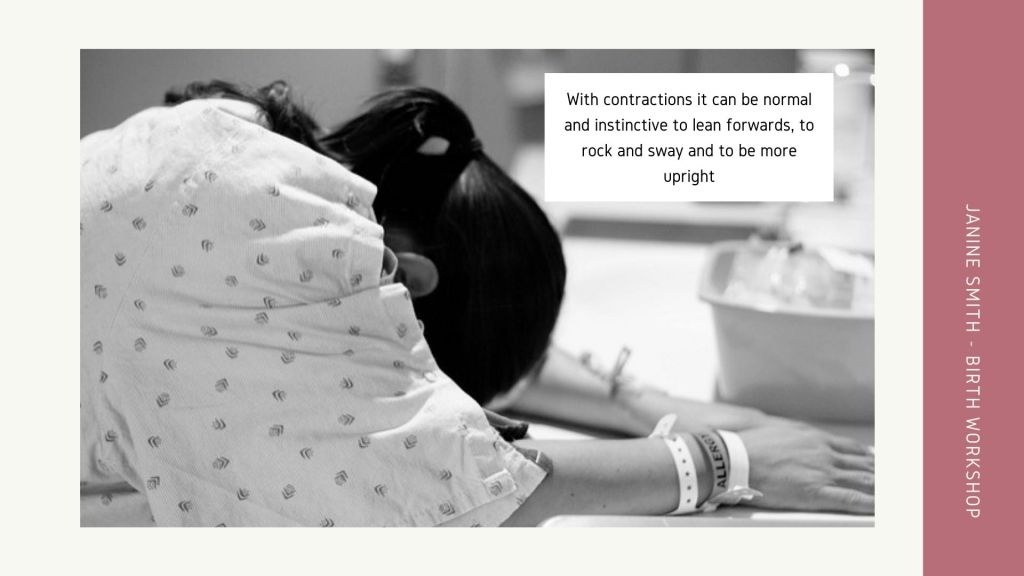


It can also be to your benefit to start thinking about labour positions during your pregnancy. There’s nothing complicated about it – it is just about becoming more familiar with different positions.
Using a pregnancy/gym ball can help to ease backache in the third trimester but it can also be great preparation for using one in labour, because it becomes more familiar.
“Women in labour can be less likely to assume positions they are not familiar with, especially because the media is full of images of labouring women lying on a bed. Preparation during pregnancy can help to change this behaviour and provide the opportunity to try different positions which can help to lessen the pain of the powerful contractions.”
(reference MIDIRS Positions in labour and delivery)

As you go through this module and the resources, you can make notes, jot down your questions and start to develop your action plan for labour and birth.
And please don’t hesitate to message me to arrange a conversation to talk through your questions.

Welcome To Your Antenatal Course
1. Labour
2. Birth
3. Pain Management
4. Labour & Birth Challenges
5. Meeting Your Baby
6. Your New Baby
7. Relax & Breathe Resources
 antenatal & postnatal specialist
Leave a Reply