Labour isn’t always straight-forward so it useful to think about what you can do and how you can manage some of the challenges of labour and birth.
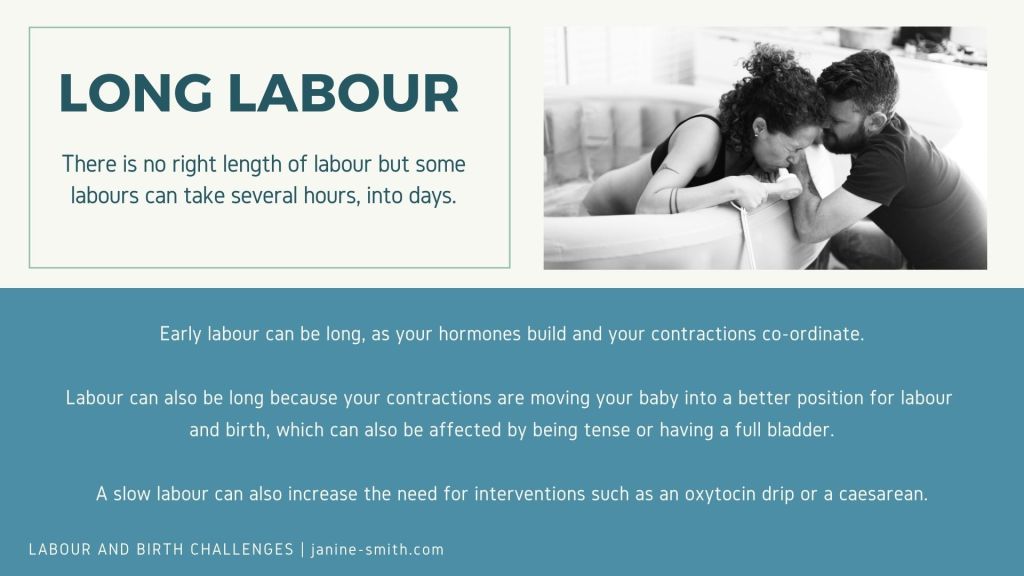
Labour is long
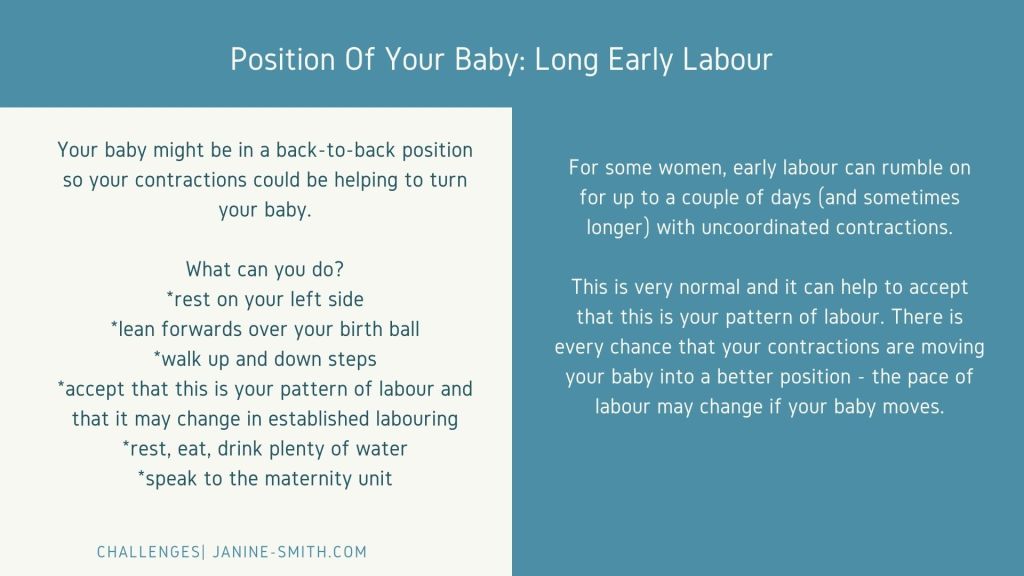
Early labour can be long, as your hormones build and your contractions co-ordinate. Your baby might also be in a back-to-back position so your contractions may be helping to turn your baby.
It can be frustrating, feeling like all your contractions aren’t really doing anything. Try to remember that there isn’t a correct length of labour to aim for – labour is just too unique for that.
Once you are in established labour, this can impact what pain relief options you choose as you may need a break and a chance to rest.

What can help?
- resting on your left side
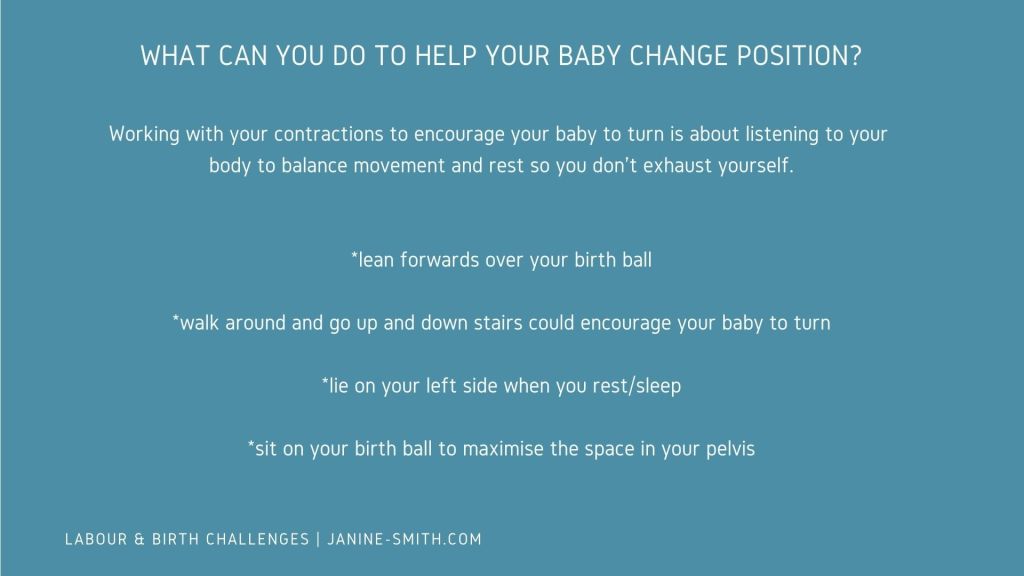
- leaning forwards over your birth ball
- walking up and down steps, trying this sideways to maximise the space in your pelvis
- accept that this is your pattern of labour and that it may change
- rest, eat & drink plenty of water
- can you move more? can you have more gravity?
- have you been to the loo? A full bladder can slow things down
- do you feel safe and secure? Talk to your midwife and your partner and say what you need.
You have a continuous back-ache
Some women can experience a continuous back-ache which remains in-between their contractions. This can be tiring and it can wear you down but chances are it is because your baby is in a more back-to-back position and when he moves, this will most probably ease.
This can mean making different decisions about pain relief to rest and to get a break from the back-ache.

What can help?
- leaning forwards over your birth ball can help to ease some of the pressure on your lower back
- some gentle pressure on your hips can help to ease pain in the lower back
- walking around and going up and down stairs could encourage your baby to turn
- getting in the bath, having the shower focused on your back or using a birth pool may help to ease this back pain
- a heat pack on your back
Your waters break in early labour
This happens in about 5% of cases – the amniotic fluid can go with more of a trickle or there may be a gush of fluid. Contractions can kick in at the same time or it can be a few hours before they kick in.
Speak to the maternity unit, if your pregnancy has been straight-forward and you are past 37 weeks they will most probably advise you to stay at home for a while, to keep an eye on any temperature and wait for labour to get going.
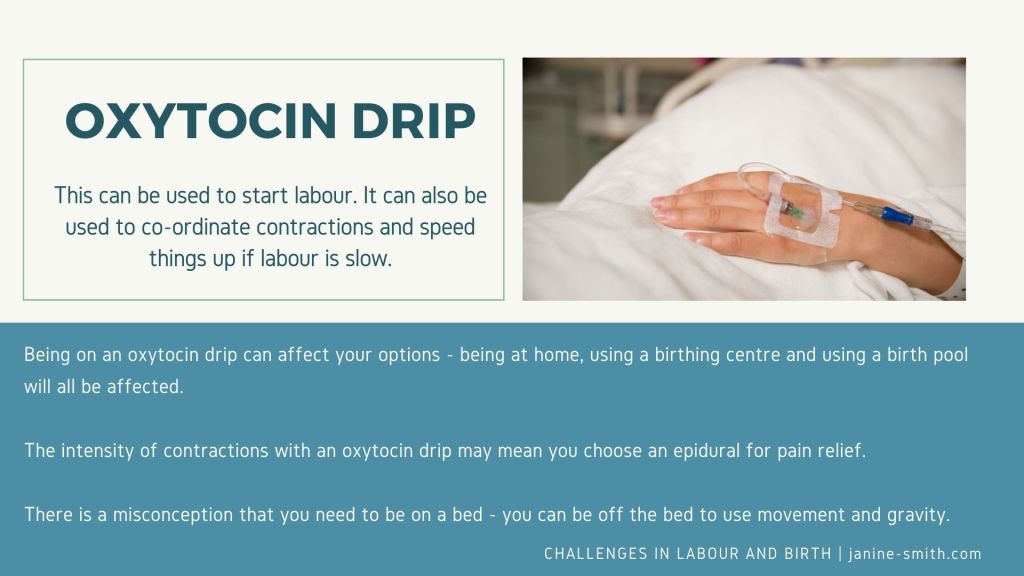
If your waters have broken for a number of hours and you are not having strong contractions, an oxytocin drip may be suggested to create contractions. This may mean you make different decisions about pain relief.
What can help?
- try to relax, wander, rest and wait for contractions to get going
- keep talking to the maternity unit whenever you need reassurance
You are feeling vulnerable and overwhelmed
Early labour can be a time when you are at home without a midwife, which can cause feelings of insecurity and uncertainty. What do you need? Is your partner with you? Do you need to speak to the maternity unit?
Maybe it is time to go in to hospital or to call for your midwife if you are having a home-birth.
Being in strong labour and being in hospital can make some women feel vulnerable. What do you need? What needs to change? It can be helpful to make your birth space feel more comfortable and supportive for you, with fewer people so it is a quiet and calm space.
This can mean making different decisions about pain relief because the contractions could be challenging and you could be tired.
What can help?
- accept your pattern of contractions
- focus on your breathing to be calm and head off any panic
- ask yourself what you need?
- talk to your partner and your midwife about what you need
Your contractions are overwhelming
Contractions can be overwhelming if they are close together, if labour is fast or if you are frightened of them.
Pain relief options may change to remain comfortable and to manage your contractions.
What can help?
- work with your midwife to get all the reassurance and support you need
- it could be that you are having a fast labour, which can feel like continuous contractions – focus on your breathing to be as calm as possible and to manage any feelings of panic
- or you could be in transition, so almost fully dilated. It is normal to feel overwhelmed at this stage
You are tired
Depending on how your labour is progressing, this may mean making different decisions about pain relief to provide an opportunity to rest.
If your labour is long, you could be feeling tired and this may be more of a challenge than your contractions.

What can help?
- drink water
- eat something
- rest in-between your contractions
- look at your pain relief options
- can you dig deep and keep going?
- ask yourself what you need
- can you use different positions?
You need to be on a bed
This may lead to more pain relief as well as medical interventions such as forceps, ventouse or a caesarean birth.

What can help?
- Do you need to be on the bed, is it possible to move about and have more gravity?
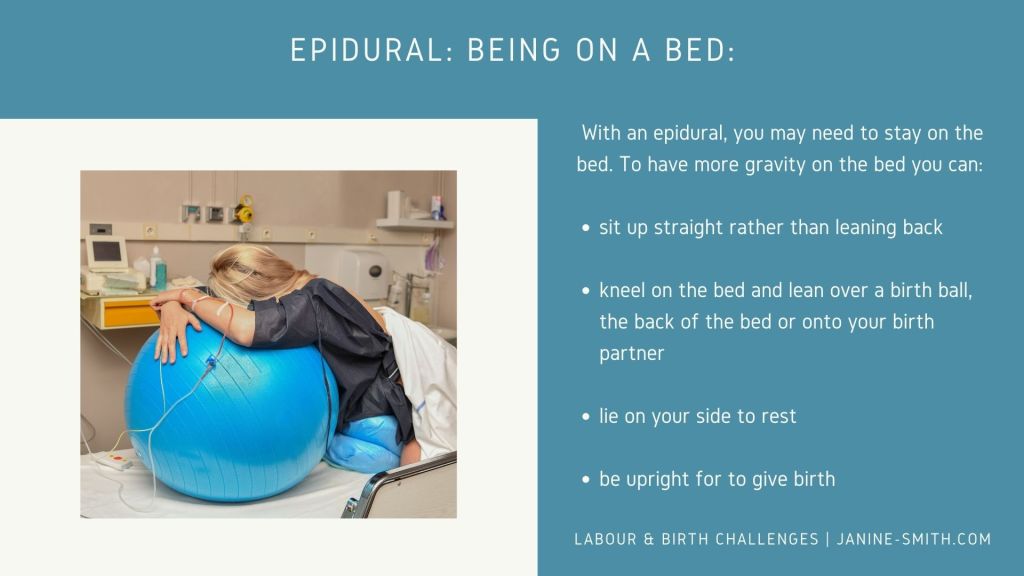
- If you need to be on the bed, can you have more gravity? This could just be sitting up straight rather than leaning back or it might be possible to kneel on the bed and lean over a birth ball. Support from your partner will be needed to keep you secure.
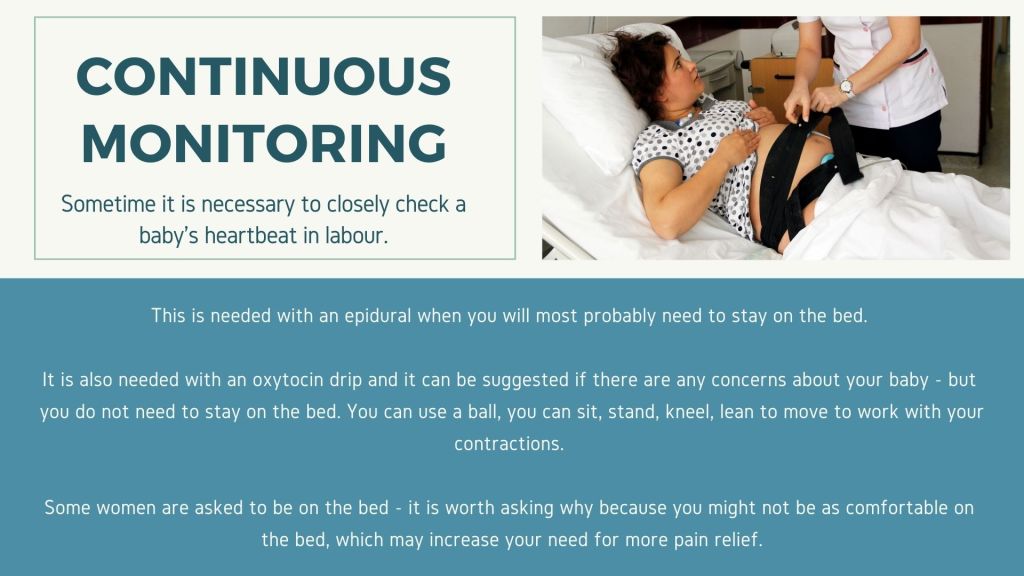
If there is an issue with your baby’s heart beat
This could lead to a change of pain relief – for instance you would need to get out of a birthing pool – and it may lead to further interventions such as closer monitoring of your baby or an intervention to birth your baby.
Your baby’s heart rate will be monitored throughout labour and birth so if your midwife becomes concerned she will tell you and explain the next steps. Ask questions so you understand what is happening and what your options are.
Focus on your breathing to stay as calm as possible and to control any feelings of anxiety or panic.
Labour is fast
This could reduce your pain relief options as there may not be time for an epidural or to prepare the birthing pool.
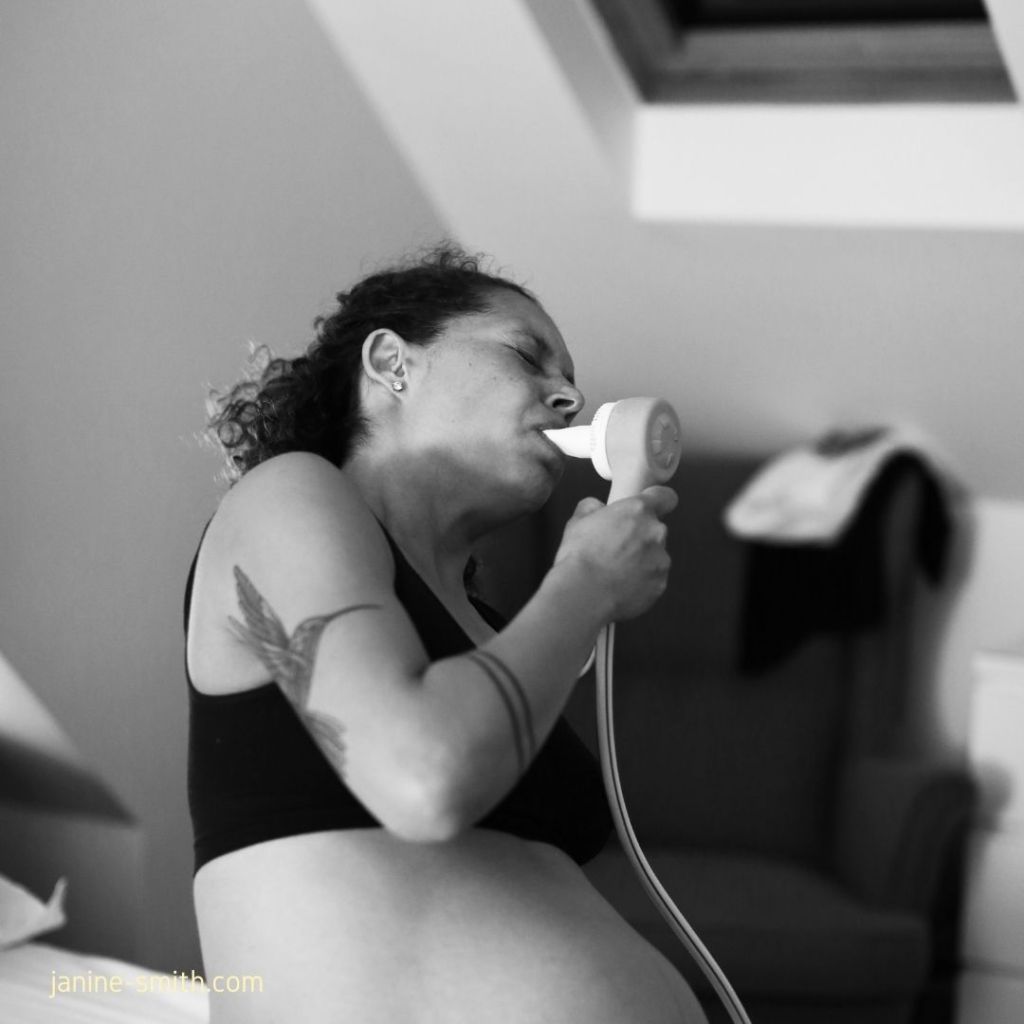
What can help?
- breathe for focus and calm so you can prevent panic and listen to your body so you can move to be as comfortable as possible
- let your body do what it needs to do
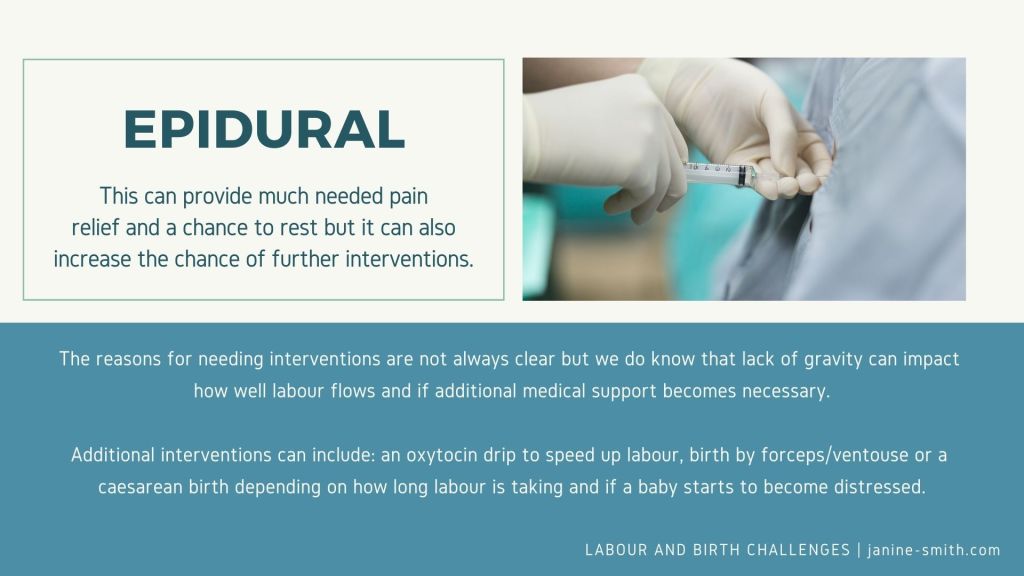
Having an epidural
This can provide much needed pain relief and a chance to rest but it could also increase the chances of needing medical interventions such as a caesarean or birth by forceps/ventouse. The reasons for needing interventions are not always clear but we do know that lack of gravity can impact how well labour flows and if additional medical support is required.
If you have an epidural, it may help to:
- have the back of the bed upright, so you are not leaning back
- sit, up, kneel and lean where you can because labour requires movement and gravity
- kneel and be upright for birth – to help your baby to descend and be born
If there is a clear medical emergency, there will be more urgency to any communication. Be guided by the medical staff and focus on your breathing to stay as calm as possible, so you can try to prevent any feelings of panic or anxiety. Ask questions so you know what it going in and if there is anything you can do but let the midwives and doctors do their job.
Examples of an emergency include: a slow heartbeat, a haemorrhage or shoulder dystocia. These emergencies are rare but they do happen and they require swift action by the medical professionals.











As you go through this module and the resources, you can make notes, jot down your questions and start to develop your action plan for labour and birth.
And please don’t hesitate to message me to arrange a conversation to talk through your questions.

Welcome To Your Antenatal Course
1. Labour
2. Birth
3. Pain Management
4. Labour & Birth Challenges
5. Meeting Your Baby
6. Your New Baby
7. Relax & Breathe Resources
 antenatal & postnatal specialist
Leave a Reply